Welcome to our blog

News From The Page Headerimage
Here's a monthly blog to discuss ideas in the making
& share perspectives on writing and the world.
It's also available:
🇫🇷 en français, 🇪🇸 en español, 🇩🇪 auf Deutsch.
Click here to subscribe
to our monthly newsletter
: An improvised destination

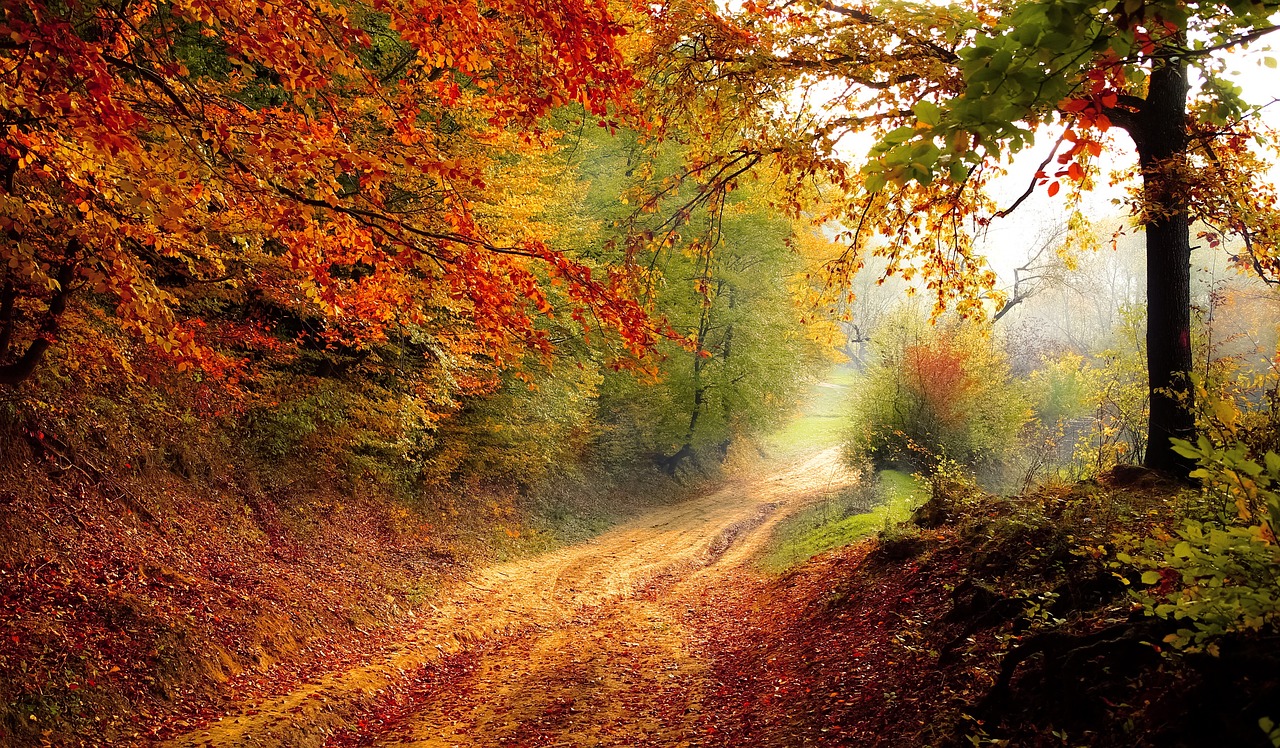
Once upon a time unfolded a journey that started like a wildfire rumpaging through little-trodden paths and landed at the lagoon-like waters of a sprawling sea. Does it sound like the introduction to a fairy tale or a fantasy story? It could, but it isn't. Hence, let's focus on factual reality: the present moment that spontaneously unravels into the next and so forth -- nothing to do with reality-TV.

At the very start of the journey, we were met with these facts:

  • Ambient temperature: mild and sunny
  • Terrain: rolling hills that would give way to steeper slopes
  • Path: winding
  • Equipment: adequate
  • Mood: upbeat
  • Distance to walk to first port of call: about 26 kilometers

Guess what happened next, dear readers? Several possible outcomes for your consideration:

  • We reached our intermediate destination with our spirits as high as when we had initially set off.
  • We arrived at our intended port of call, hungry and tired, because of unforeseen setbacks.
  • We did not make it to our planned stopover because of adverse conditions, and instead had to retrace our steps to revisit our departure point.
  • We arrived at an unplanned destination.

Drum rolls.

Upbeat music. The suggestion that most correspond to the facts is the last one in this instance. Well, yes, we had to spend the night in a mountain refuge without electricity but with a roof, thick stone walls and logs of wood in guise of chairs. How come?

Let's rewind. After a few kilometers spent alongside sinuous tarmac roads, passing villas, chalets and farms with their barking and sleepy dogs, curious cats and the odd cars, we ventured off track. We trudged narrow muddy paths etched through sloppy fields populated with rocks, thorny bushes, low trees, a few wild boars and the unspoken promise of priceless views of the valley. We reached a crossroad where an aged wooden sign pointed us towards the intended direction. The path was swirling up. Although it hid what was to come from view, we could already observe that where once stood a luxuriant forest, burnt trees the colour of charcoal endured and gentle leafy giants reclined on their side. A few kilometers on, the trail seemed to become even dimmer. It was swallowed in thorny vegetation here and fallen trees there. We had to escalate a few trunks while using our sticks to keep prickly overgrowth at bay. Then a few more. We thought: "It's just a rough passage. Let's go through it." It wasn't the first time we had encountered obstacles on a trekking path and we were prepared to tackle them.

mounts and valleys

What we were not expecting was that the mountain path would simply disappear in a jungle of thorns and unrooted trees. When minutes became an hour, it became clear that the trail was not just impracticable but dangerous as dark clouds crowded the sky, rain started falling and thunder rumbled in the not-so-far distance. The map was not appraised of the latest climate swings in the region yet it pointed us the location of a refuge. It was closer than our intended destination. The pricked skin of our hands, arms and legs bore testimony to our growing tiredness. Yet, we could not stand still when lashes of thunder dropped in the closing horizon. We had to grit our teeth to make our way through.

Companionship helped. Yes, we yelled at each other. Yes, we swore to never do it again. Yes, we shouted more explicits than we could endure. But we ultimately collected our thoughts, reviewed our options while sipping water to refuel our tired limbs from climbing and lumbering through an unwelcoming steep (and slippery) terrain. After the triumphant rays of a fading day shoed the storm away, warming our aching muscles and lifting our moods, darkness fell. Not at once, yet it envelopped us with a steady, at times unnerving, quietness for the uh-uh of an owl in the distance and the rustling of nearby vegetation.

The image of Rambo brandishing a machete to carve his way through the jungle sparked my imagination. My stick was no machete and we were no Rambos but with the steadiness of walkers who keep going, we arrived at the refuge short of 22:30 -- 14 hours after we had initially set foot on the path. We got rewarded with amazing views of the sleepy valley dotted with poetic lights. We had to go without dinner and forgo a comfy sleep for a spotty sequence of dozing twenty minutes at a time or so. Yet we felt grateful for the shelter. We had enough equipment to remove our wet clothing and layered up for the night. We had one mint sweet each for dinner. We had each other's shoulder to literally rest on.

We walked down to a valley at dawn and took a day off trekking to bus it to our next destination. We would resume our journey on foot to arrive six days later. Our reward was not a grand prize but just our mere satisfaction at having completed yet another path. We were now ready to put our feet up and dip them into the crystal-clear waters of the island whose secretive mounts and valleys had opened that little more.

Tangible

And so we wrap the recounting of our "real story" from a tangible perspective. When it comes to fantasy, it isn't an enemy of reality as long as it is clearly distinguished. Fantasy does not simply encompass reading or dreaming about bigger-than-this-world epic stories but mostly reside in fantastic ideas that emerge in very down-to-earth moments. Some never see the light of day, some whittle away, some come to life as timid then solid plans. After all, the fantasy of a delicious meal, warm coffee and plush bed kept us going through the night.

How about you, dear readers, have you experienced a journey who took you to unexpected turns of events but that you now recall with a pinch of salty wisdom hardly earned? Just send us a message through our contact page or social media to give us your take on it.

On this note, I would like to thank you for coming by. Let's empower ourselves (yourselves) and the world through reading, writing and just doing. If you like what you read, sign up to receive our witty monthly blog in your inbox! It's completely free.
And if you have suggestions for a future blog post, you can give them here.

: Recipe for a good time

Fresh air, salty breeze, forest baths, sea sails, ocean dips, beach lounging, mountain treks, hikes through hills and valleys, country and city trips — can you sense them yet? Summer memories are surging with a scent of exotism no matter if you stayed near home or went far and wide.

Perspective and perception shed the monotony of daily life with a hint of spontaneity and a spoonful of carefree attitude. The recipe would not be complete without a dash of planning. Some add it with parsimony and prefer the sharp taste of last-minutes — nothing final about them! On the contrary, they tease the unprepared journeyer with their fragrant possibilities and world of unknown opportunities. Perception of time stretches at will to free the holder of its apparent dictat and release them with generous servings of present moments.

Ever heard of accordeon - recollections? Probably not because that concept just popped up from my embodied mind. It refers to these "Proustian memories" where lost time is found again, because it was/is/will always be here and there. It just requires a scent, a flavour, a touch, a sound or a look to let scenes of life unravel with effervescence.

jungle landscape

Concoction, potion or recipe — it takes a few core ingredients to make the journey worth remembering.

Potential ingredients

The recipe for a good time is relative, that is, the list of ingredients can be as short or as long as tickles your fancy:

  • Atmosphere: do you like a serene ambience or a splash of music in the back/foreground? Depending on the setting (urban or country, indoor or outdoor) you can adjust noise levels to fit your surroundings and liking.
  • Company: solo is not a rude word and there are many solo adventures to uncover. However, you can also enjoy journeying with companions. Relatives (husband/wife, partner, brother(s), sister(s), parent(s), cousin(s), uncle(s), aunt(s), grandparent(s)), friends, colleagues, — people you choose to travel with — add their unique twangs, nuances and flavours to the voyage.
    The brotherhood of man can be defined (cf. Cambridge dictionary) as the "friendship and loyalty that some people think should exist between all humans"; travelling is the perfect opportunity to bring that adage to life.
  • Inclusivity: the destination does not make the journey as much as the way to get there. Step-free access? Steep hills? Rolling waves? Ironing out those factors can help you relax.
  • All-in: are you a planner or a spontaneous journeyer? If the former, you might prefer to get an all-in package. If you're the latter, you'll surely opt out from what you perceive as restrictive. You want to discover what the journey has to offer without being told in advance.
  • Weather-proof: come rain or shine, adventure awaits. Of course, that picnic in the park might not turn out that fun without a roof or a leafy tree above your head when it pours down. Hence, make room for a plan B to cast "cancellation" to oblivion. For instance, check whether the park includes sheltered facilities or nearby cafés.
  • Flexibility: yes, you wanted to see that museum or visit that landmark, but sometimes the journey takes you other places and that's okay.
  • Mysteries: I am often amazed at how little is known about common locations. I remember journeying to Solsbury Hill. At first glance, a green mount throning above valleys. At second, a place rich in history and the inspiration behind a famous song.
  • Time: I'm sure you've told yourself that phrase or heard it before: "When I get some time, I will...". The thing is that you've got time but you, and only you, can decide how to make use of it.
    If you're a procastinator then you probably tend to delay doing things, while if you're into FOMO ("Fear Of Missing Out") you want to experience it all now because you think (possibly mistakenly) that you'll miss out on something amazing if you don't. Listen to your inner sense of time and leave the clocks behind for a little while. Then, you will witness the subjectivity of time, realign with your inner compass and free yourself from the arbitrary seconds, minutes, hours and days to discover what lays beyond, out of the time.

tropical landscape

How about you, dear readers, visitors and journeyers? What are the secret ingredients to your journeying recipe? Just send us a message through our contact page, X or reach out on Facebook to give us your take on it.

On this note, I would like to thank you for coming by. Let's empower ourselves (yourselves) and the world through reading, writing and just doing. If you like what you read, sign up to receive our witty monthly blog in your inbox! It's completely free.
And if you have suggestions for a future blog post, don't hesitate to send us a message through our website.

: What's in a name

What's in a name? A short question for a long answer or, more likely, many answers. Whether we are young, poor, less young, rich, educated, self-taught, in the south or north hemisphere, each of us has a name. For humans, a name consists of one, two, three or even four first names, also called forenames or given names, sometimes a middle name, and, last but not least, a surname. The name used for this blog is a pen name, that is, my author's name. Names tell the history of our origins, beliefs, culture(s), lineage and pave the way for the future.

Let's consider a few random names: Gunter Schmidt, Sinnead O'Shein, Berenice del Goya Sabor Gomez, Babacar N'gado, Thê Nat Nguen, Vladimir Kusturiça, Pia Sorensøn, Eleonora Esposito, Maurice Durand, Svet Novosibirsko, Hiroko Matsamoto, Bernie Wood, Estebán Ignacio Sole Alcanzar, Hui Chen, Bienvenu Salomé, Mark Smith, Elke Holstein, Sonny Kirchbaum, Mehmet Kefir, etc. Now, let's make asumptions about these people based solely on their full names (forename and surname). Where do you believe Gunter Schmidt is from? Where does that person live? Is it a he or a she? Next, think of Estebán Ignacio Sole Alcanzar and repeat that exercise. How about Babacar N'gado, Hui Chen or Elke Holstein? Take a moment before you continue reading.

Some of us would probably be surprised to hear that Hui Chen is Australian of Asian descent and presently lives in Austria. Her father is half-Chinese, half-Japanese while her mother is Scottish. Babacar N'gado could be German or French, although typically that name would be associated with African origins. Meanwhile, Elke Holstein lives in the vicinity of most of her relatives and a few of her friends who have been in the same region for generations. Not that simple after all.

Full names are not only a testimony to our ancestry and relationships but they actually accompany us throughout our life journey. A name is given around birth, yet it is the life that we live that give it its colour and flavour. Thus, a name as widespread as "Smith" will become a beacon of an individual's experiences so that no two "Smith" are the same.

what's in a name

Because they represent means of communications readily available for each and every human, we do not own letters of the alphabet. We cannot "own" a name either, but we make it our own in relationship to our inner and outer worlds, to shape our identity from birth with every day that passes. For example, I do not own "Shi", nor "Malan", nor "Godard". However, "Shi Malan Godard" is the literary expression of my author's identity. Birth names, nicknames, stage names, for some, pseudonymes (for individuals who want to preserve their anonymity while playing punctual online games or accessing public forums) and married names, to mention just a few, all coexist within an individual's existence. Intentional misuse or faking of a name is an affront to its priceless value and human dimension.

In actual fact, it would probably take a million pages, even a trillion pages, to ink each and every name, and that would just be considering names that are typically associated with human beings. If we were to add "common" names, that have nothing common about them, as well as "scientific", "artistic" and "colloquial" names, that is, those we use to describe everyday life, biological/chemical phenomena, societal structures, fauna, flora, and so on, we would be running into billions.

So, what's in a name but an individual manifestation of life's effervescence on Earth where more than 8 billion people coexist?

The sound of my name

In deference to the word or set of words that refers to how a person is addressed, we'll wrap up with an excerpt from Nova Terra & The Fortress, a futuristic fantasy novel. The story unfolds on a fictional planet where individuality and self-expression are frowned upon. The main character evokes the strength she has drawn from hearing her name, and how it has helped her regained a sense of hope:
"The sound of my birth name was a wake-up call. I existed; I had a life before landing on Nova Terra. I knew deep down that I may not have my earthly life back, however, I wanted to keep feeling the life force pulsing through my veins. I wanted to honour my family who had given so much for me to board that spaceship.
I wondered if the invisible attendant or Lasli, probably both, had set me on a resolute path from the moment I had set foot on Nova Terra. Part of me wanted to escape or rebel against it, and feared getting lost in its meanderings. Another part wanted to explore the maze’s nooks and crannies, and leave no stone unturned on the path. I had to reconcile both sides. I recognised that even if theirs would be a tumultuous relationship, they could happily cohabit if left to their own device. I decided there and then that I’d do my utmost to make Nova Terra my new home. Someday, loved ones, cherished relatives and treasured friends, would make the journey here, and I would welcome them with open arms.
A door had unlatched, letting many opportunities in, albeit with challenges in their fold. I would tackle them with a clear head, an open heart, and the humility and strength of an ever-renewing presence. I felt exhilarated like never before, ready to get to grips with anything that would come my way."

Disclaimer: The fictional character, "Desrea", speaks in the first person to describe her experience. "I" stands for a singular pronoun. Not more, neither less meaning is intended from its use. The names used in this blog are made up.

Thank you for coming by and checking us out. Let's empower ourselves (yourselves) and the world through reading, writing and just doing. If you like what you read, sign up to receive our witty monthly blog in your inbox! It's completely free. Do you have any comment about an existing entry or suggestions for a future blog post? Just send us a message through our contact page, X or reach out on Facebook.

: The future starts today

Today I wanted to write about something really deep and meaningful. Then, I thought to myself: people want something light and entertaining, why go to such depths? So, how about a middle-of-the-ground discussion? At that point in time, it occurred to me that "people" are neither very deep, nor just light, nor in the middle — "people" are a life form. What and who we are can't be put in a box. There is room for playing indoors/outdoors, yet life, in all its forms and expressions, is not a game. If you're spiritual or religious, you could say it's sacred. If you're an atheist or a down-to-the-ground person you could say: it simply is. If you're neither or don't have an opinion yet, you'll figure it out.

What we think shouldn't be compartmentalised, that is, not categorised arbitrarily. We could use a metaphor to illustrate that position: choose an ancestral continent (Asia, Africa, Europe, the Americas, Australasia...) and make it for an instant the representation of a whole life form. Then, colonisation would come in and mess up with it. So, the human would have to be artificially "divided" between a light, a deep and something-in-the-middle version of him/herself (or between a young, a middle-aged and an older version, or a simpler, average and very intelligent one, or a vegetal, animal and human version, etc.). At some point, the colonised would have enough of that imposed and impoverished version of life and the world around them, and the colonisers would realise what a massive mistake it was. However, in the rush to leave, they could (notice the use of a conditional tense) mess it up even more by randomly putting borders and labels. Scrap that. Instead, the colonised and colonisers could work together to restore the whole. That would take patience and efforts and probably some level of squabbling but that would function.

fire earth water air

The future starts today. So, for me, it means to silence that natural tendency to please even when something feels wrong and to espress my outrage (and no, voice hasn't got the monopoly, it represents just one amongst many means of communications).
Violence isn't required nonetheless. To me, it tastes like a last resort with bitter consequences: innocent lives wasted, untold stories and children living in fear. What is it for each of us, for you? Cannot say it. Nobody or nothing can say or feel it in y/our place (NO!). Each living being has individual means of making their thoughts and feelings known. Some amongst us prefer to take a step back and observe, some can opt for a more aggressive stance. Yet, all characters should remain conscious of the impact they can have on their surroundings. Words, just like stones, can hurt if they're thrown carelessly. Treat life as you would want to be treated: take no prisoner and no proxy — people aren't puppets (NO!).

Past, present, future

On that note, we'll wrap up with an excerpt from Nova Terra & The Fortress, a futuristic fantastic novel, that relates to this month's blog. Although the story unfolds on a fictional planet, the main character contemplates recent happenings, and how these could bridge past, present and future:

I am patiently standing in the orderly assembly of pathfinders when a tingling sensation erupts around my left shoulder area to alert me of incoming information. I receive the training instructions with full attention, however, I am wary of the new fancy moniker. What does it entail? Will we have to dig trenches in dunes, carve rocks and brandish machetes to draw trails in luxuriant jungles? The Grand View has only let me spectate chunks of Omnispecta’s surroundings, sufficiently to see the barren desert landscapes, the jagged profiles of mountain ranges and to make out what seemed like a large body of water sprawling besides its walls. The fire of the land could spark us up but where to?

The pathfinders’ training was dense. I learned to stream across various frequencies in quick salvos to avoid detection, and to reverse unknown incoming frequencies in the manner of a boomerang. Most surprising of all, I was shown how the mere body could and should move — the positions it ought to adopt if I could not engage streaming. The Omnispector in charge mentioned that it was likely to happen in an alien environment loaded with interference. All students, and I was no exception, felt a mix of anxiety and relief at receiving the instructions.

At last, terrestrial survival skills which our ancestors had tirelessly developed over the course of centuries were no longer considered secondary or backwards. Instead, they were to prove essential, even on a remote planet championing a supposedly superior civilisation. Ultimately, the value of our birth cradle and its history were being recognised. I spontaneously thought of Nana, my parents, siblings, friends, and earthly beings. How I longed for them to join me and bring humanity back to the land of streamings! How they could enrich the ways of Nova Terra, however futuristic they seemed.

Disclaimer: The fictional character, "Desrea", speaks in the first person to describe her experience. "I" stands for  singular pronoun. Not more, neither less meaning is intended from its use.

Thank you for coming by and checking us out. Let's empower ourselves (yourselves) and the world through reading, writing and just doing. If you like what you read, sign up to receive our witty monthly blog in your inbox! It's completely free. Do you have any comment about an existing entry or suggestions for a future blog post? Just send us a message through our contact page, X or reach out on Facebook.

: Not a robot

If you have ever surfed the web, then you will have encountered a "confirm that you're not a robot" verification step. From a technical aspect, that request is based on the Turing test devised to tell a robot from a human apart. Ethically, it is an increasingly blurred statement. Most humans access the Internet through varied A.I.-enhanced software. ChatGPT itself has apparently beaten the Turing test, although it is obviously an engineered bot aimed at facilitating the lives of millions of humans.

In a study finding, Stanford University highlighted how interactions are no longer the preserve of humans to humans, or humans to animals, but increasingly concern humans to machines. The researchers raised the topic of how human behaviour is potentially impacted and warns of a “loss of diversity in personalities and strategies—especially when being put into new settings and making important new decisions.”. However, the study authors do not paint the gloomy picture of a future where A.I. overtakes or eradicates humanity either. On the contrary, they reiterate the importance and responsibility of humans in steering A.I. and machine engineering towards a better future for all.

Many well-known scientists like Marie Curie or Oppenheimer did not entirely comprehend the long-lasting impact and enormity of their discoveries. Nuclear energy and the atomic bomb have reshaped the world and shifted the balance of power when they emerged in the 1930s and 1940s, but at what cost. Banning them altogether without a viable alternative was not a solution either. Thus, safeguards have been put in place to prevent their misuse and undue proliferation.

With the advent of A.I., humans have to temper the ease of machine-generated information and answers by making a conscious effort to keep using their capacity of thinking wide and far—even unlogically—, to ponder their choices and choose as well as consider options that do not match any algorithms.
So, before turning your favourite chat bot into a "practical joke" and ask ChatGPT, Claude or Copilot how to start a war, think: artificial intelligence is not a game, what you ask matters, not just for you but your fellow beings and the future of knowledge and intelligence, whether organic or artificial. Humans and machines can possibly work together for the betterment of most, as long as development is tempered, not rushed through time, and puts lives before profits.

human inspired and ai generated picture of a futuristic world

Overall, here are some tendencies/potential outcomes to discourage:

  • I would stand strongly against the use of A.I. to manipulate, inverse or change long-standing values that have taken the course of centuries to develop, and against utilizing A.I. to constraint values by arbitrarily equating them with a political, economical, cultural or societal movement. In that dystopian scenario, "sharing" could become associated with far-right views and "happiness" could become the paradigm of left-wingers (NO!).
  • I would advocate against the use of A.I. by one or several nations, secret services, conglomerates, military or paramilitary entities to control, distort and manipulate opinions, country dynamics, international relations, that ultimately impact the present and future of mankind and life on Earth (NO!).
  • I would discourage the monopolisation and filtering of past and present knowledge through simply A.I. to the detriment of creativity, wellbeing and freedom of opinion of whole nations and peoples (NO!).
  • I would stand against the use of A.I. to schematise and even reduce living behaviours and opinions (NO!). Artificial intelligence is not here to model, then appropriate, discard or disregard existing life in any form (human, animal, etc.)—that's called a source of global annihiliation, i.e. destruction (NO!).
  • I would prevent the use of testing of A.I. capabilities on medical, military or business grounds on life in all its forms (human, animal, vegetal), especially children, without expressed consent (NO!) and defend the right to withdraw that consent at a moment's notice and of course, protect human rights and the right to live at all times.
  • I would stand against the use of A.I. to subject life into submission or to create an artificial hierarchy between machines, humans and animals (NO!) where machines or enhanced-intelligence would be considered superior or better (NO!).

I would encourage:

  • The use of A.I. to enhance medical care, scientific discoveries, and technological advancements with clear ethical considerations (no "guinea pig" testing, no test object!) and a roadmap (YES!).
  • The development of A. I. to counter the effects of climate change, again on ethical grounds (YES!), and while considering the wellbeing of life in all its forms (YES!) before astronomical profits with no long-term vision or a conscience.
  • The use of A.I. to advance mankind and preserve life on Earth.
  • The respect of knowledge in all its expressions, whether through a machine or an organic being as long as it's not "planted" or imposed (YES!).
  • Foster an open dialogue between machines, humans and animal/vegetal life, that is encourage a variety of sources of knowledge and forms of intelligence and expressions of life (YES!).
  • The strengthening of international safeguards. The Unesco has made recommendations on Ethics of Artificial Intelligence but these do not go far enough in scope, and should be more legally binding and included at all levels of governance.
  • To close this chapter, let's remain attentive and humble in the face of new facts. It's ok to ask more questions, to research, to ponder, or to say that we do not have all the information we require to make an informed choice instead of accepting any source of knowledge, whether A.I.-generated or organic, as a universal and final truth.

    Pages long are dedicated to the A.I. topic so just sift through various sources to get a more wholesome picture. For now, we'll be moving on to the topic of creative writing—a field that should be preserved from the unwanted incursions of lazy people who utilize A.I to generate entire fiction and non-fiction pieces instead of penning them, boo!

    Nova Terra & The Fortress

    Writing requires patience, creativity and humility. So we are proud to announce that after months of working on a futuristic fantasy piece, it has made its way to virtual and real bookshelves. We invite you, dear readers, to immerse yourself into the world of Nova Terra & The Fortress. Just click here to get a free glimpse of the intro chapters from the novel.
    Please pass the link onto any potential fans of fiction writing and avid readers. And if you're curious and want to read more, we will be running a countdown promotion for the Kindle and paperback editions of the book during the first week of June. We hope you'll enjoy the read as much as we have enjoyed writing it and look forward to receiving your comments on the storyline.

    Nova Terra & The Fortress: a  novel out now

    Thank you for coming by and checking us out. Let's empower ourselves (yourselves) and the world through reading, writing and just doing. If you like what you read, sign up to receive our witty monthly blog in your inbox! It's completely free. Do you have any comment about an existing entry or suggestions for a future blog post? Just send us a message through our contact page, X or reach out on Facebook.

    : Of writing, publishing & reading

    From a string of words to a book, what does it take? Patience, tenacity, procrastination, imagination, re-writings, proofreading and a sprinkle of grammar with a large spoon of vocabulary when erring on the linguistic side.

    Months after months, the story took shape. Sometimes, I just sat down not knowing exactly what would come out of my fingertips and I let them dance about the keyboard. Once in a while, I doodled pensively on a piece of paper, jotted a few notes, sketched a storyline. However, it would not be genuine to say that I knew from the get-go how the plot would evolve and how the characters would interact. I had to let the storyline mature and slowly let words, phrases, sentences, paragraphs, then chapters unravel their contours.

    I would never had thought that it would be so difficult to remove a page, let go of characters or re-write a whole chapter. But then I realised how reworking these elements would instil more life into the story.

    Nova Terra & The Fortress: a fascinating novel out now

    When I received the proof book, I felt a sense of pride at having completed something. Yet, I am fully aware that it is just the beginning of a new chapter which runs in parallel with writing a further installment: promotions, social media, word-of-mouth, and so on. I must confess that this area has not been my stronghold and when I read through forums, I understand that many writers and authors experience a similar challenge. Yet, marketing is not a dirty word, more like a persuasive art where text and design intermingle to convince you that a book is worth your while and that, as a reader, it will feed your imagination or arouse your curiosity and thirst for knowledge.

    So, the whole exercise is about striking a balance without reducing a piece of writing to a sole marketing product. It aims at finding a way to honour its contents and reconcile the creative part of writing with a more matter-of-fact approach to living. I have actually worked in the marketing field where I have found more than a few pearls in "copywriting" (not in the sense of stupidly (poor - spiritedly) duplicating something but with an "ad copy" or "advertisement copy" representing a unit of text). Yet, a phrase or a slogan cannot condense nor hold hundreds of pages of meaning. So, I'd invite you to take a very small risk: go and find out for yourself if the book is of your liking.

    Nova Terra & The Fortress

    We have a webpage dedicated to our writing pieces. You will find direct links to the Kindle store and Amazon where Nova Terra & The Fortress is presently published. If you'd like to get a preview of the book before immersing yourself into its pages, click here.
    Feel free to pass that information to any potential fans of fiction writing and enthusiastic readers. We look forward to receiving your comments and suggestions.

    Thank you for coming by and checking us out. Let's empower ourselves (yourselves) and the world through reading, writing and just doing. If you like what you read, sign up to receive our witty blog in your inbox! It's completely free. Do you have any comment or ideas for the blog? Just send us a message through our contact page, X or reach out on Facebook.

    : The end of provocation?

    What is the best reaction to provocation?

    • Counter-provocation, the so-called tit for tat. Hmmm, it has rarely done any good in the mid to long run - think of people, nations and the world at large. Look at trade disputes between the U. S. A., China and Europe as well as tariff riffs to get an idea. That's just an instance of economic strife. Disputes involving living beings or territories are just a no-go if we care about present and future generations.
    • Diplomacy: to an extent it consists in going with the flow. Receiving your interlocutor's words as they are, without misinterpretation or judgement, is not an easy task. The aim is to meet them at a mutually agreeable place which can prove challenging. Yet the rewards are plentiful and have provided many win-win scenarios throughout history. Take for instance the Truth and Reconciliation Commission. It was set up at the end of the Apartheid era with a view to heal the deep wounds of a country torn between perpetrators and victims. It aspired to put a stop to mindless revenge and proxy hatred, to learn from the past and to anchor in the present to prepare for a better future.
    • Empathy: seeing behind our interlocutor's harsh words to try and understand where their anger, pain or irritation comes from can make us feel like we're attentive and forgiving, yet it should not come at the expense of accountability. Indeed, being emphatic does not entail absorbing these emotions and appropriating them. Instead, it's about allowing feelings to be expressed, heard and shared to support a constructive discussion between parties. It is something I have personally struggled with in the past: I had a tendency to over-empathise with the plight of my interlocutors. I am learning to take a step back and not to get entangled with flutters of emotions, to be more present.
    • Avoidance: not the most advisable way to handle provocation, however, it's a lifebuoy on days when we feel that we've fought enough battles and can't handle rougher seas. There's always tomorrow's tide but use that tactic with parsimony.
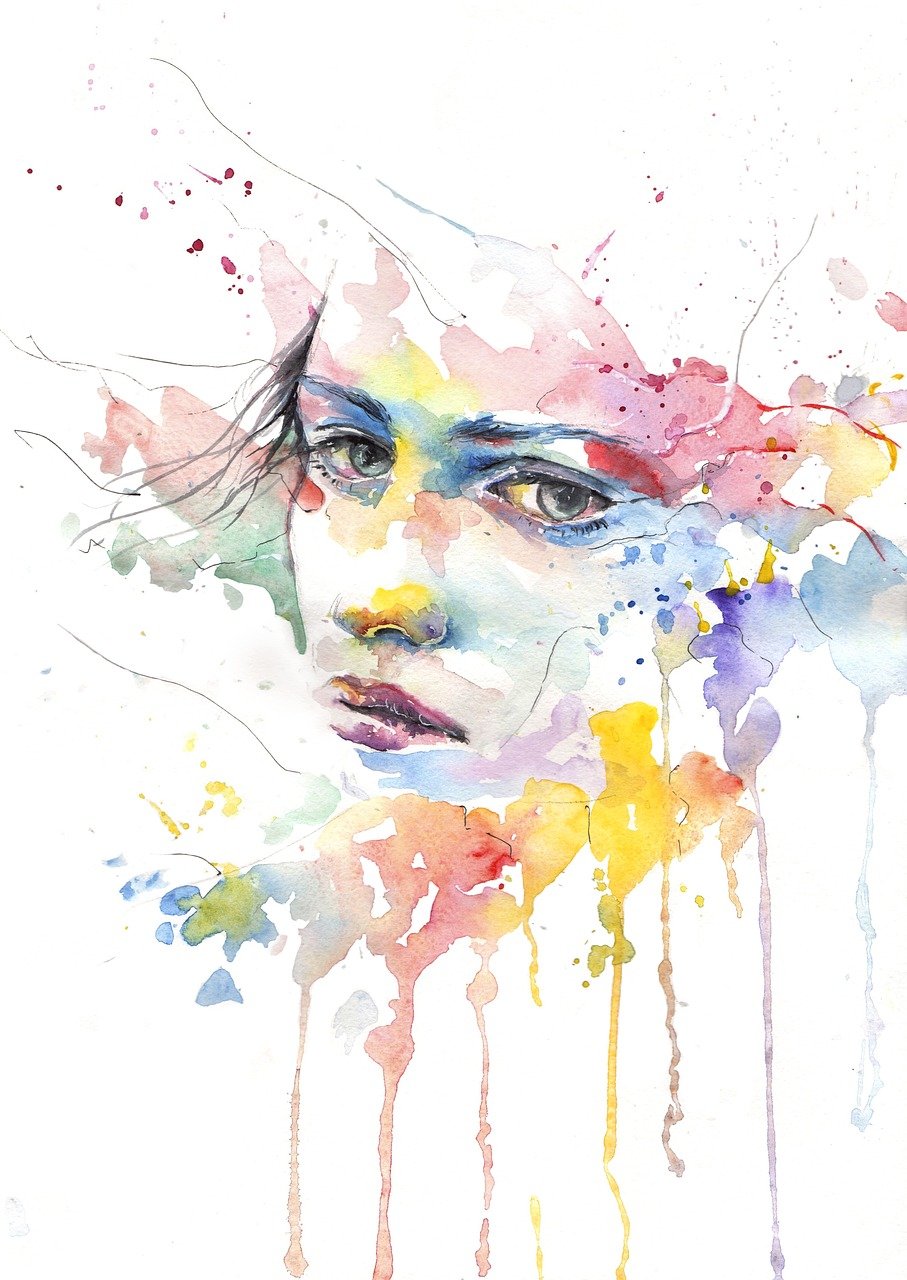
    • juxtaposed painted portraits
    • Staying calm: the absence of an immediate reaction is not an eulogy of status quo and is not enacted against change either. Provocation often happens to stir things up, however, it might not come from a grounded place. We often present the image of a child having a tantrum or that of a teenager holding a grudge to illustrate such occurrence but actually, adulthood and older age are no stranger to unfounded begrudges. In all events, they make both the beholder and beholded downhearted. Keeping one´s cool in a hot-tempered situation is no mean feat but it can have lasting benefits not just for us, but for our surroundings.
    • Action: they say action speaks for a thousand words. So, when confronted with provocative statements, just take a stance: walk out, stand up for yourself and what you believe in. Refute provocation but don't toss it away like garbage because someone's rubbish is someone else's treasure.
    • Wisdom: based on previous experience, we can try to get a vacuous provocation back into conversation mode where each participant has their say and a voice to add to the discussion.

    So, we have several tools at our disposal to manage provocation without having to press on scary buttons or without engaging in war of words. Now, let's look at it from another angle, that of stimulating authentic interaction (not to confuse with simulated interaction).

    Several angles

    In my futuristic fantasy, Nova Terra &The Fortress, the main character goes through a rite of passage in which particle reactions occur: matter and antimatter embrance in an improvised dance of life.

    I take a deep breath. Slowly. In and out. The warm glow intensifies with every breath I take, until its aureole envelops my body and encompasses everything around it.
    “Empty your fill. Then you can you be all.”
    Everything progressively turns to a luminous white. Tiny particles of atoms seem to emanate from matter to float in the void, suspended in time. I am neither here, nor there, although I am everywhere.
    I lay down. I sit. I walk. I run. I fly. I crouch. I float. I dive. I rest, then I stand again. The illusion of my body — its tissues, flesh, blood and pulsations — dissolves, absorbed by the void. Emptiness is no longer the absence of matter which I once thought it was: it is whole.
    The wholeness brings a state of completion and tranquility, yet it touts its impermanence to the novice. A disturbance provokes a sudden acceleration in atom flux, and stirred fluidity fast creates a whirlwind. The vortex keeps growing, sucking every particle toward its centre.
    “Come back to your body, now.”

    If you'd like to know what happens next, then keep watching News from the Page. We will be announcing the release of the first installment in coming months.

    Thank you for coming by and checking us out. Let's empower ourselves (yourselves) and the world through reading, writing and just doing. If you like what you read, sign up to receive our witty blog in your inbox! It's completely free. Connect with us on our contact page, X or just reach out on Facebook to express your opinion and let us know your thoughts about our site's contents.

    : A false dilemma

    Is it related to the advent of AI which is implemented on machines using binary code or just the state of the world? False dilemnas are spreading in the media and seem to be on the rise in popular thinking, business and even in politics. Does it matter? Probably. Before we dig deeper into the topic, let's agree on a definition of that expression.

    A false dilemma, also called false dichotomy, is a logical fallacy that only presents two options or arguments for an achievable outcome when more exist. Here are a few utterances to illustrate it:

    • "You're either with us or against us."
      ↣ This statement ignores the possibility of neutrality and further choice of positions. You could instead support or reject the cause to a certain degree without having to follow it heedlessly.
    • "You can either be successful or happy."
      ↣ This falsely suggests that success and happiness are mutually exclusive when there is a plethore of successful and happy stories.
    • "Either we support complete free speech, or we accept total censorship."
      ↣ This ignores the setting of reasonable limits, such as laws or civil actions against hate speech or misinformation. It also disempowers democratic structures and human societies by forgoing the power of choice and diversity which have been/are inherent to sustainable life on Earth.
    • "Stand together or fall apart."
      ↣ The phrase is often used in survival fiction and apocalyptic scenarios implying that a state of unity and total collapse are mutually exclusive, i.e. incompatible, ignoring the complexity of alliances and independent survival as well as the possibilities of patching divisions.
    • "Either we have total AI regulation, or it will destroy us and our society."
      ↣ This presents an over-simplified view of technological developments such as artificial intelligence and ignores the possibility of incremental regulation where ethical considerations and the wellbeing of most take precedence.
      From a historical perspective, we would not have benefited from advances in medicine, manufacturing, agriculture and other sectors without the Industrial Revolution. However, it could have happened without the undue exploitation of millions for the sake of wild profit (Cf. the book Capital in the Twenty-First Century which argues that the unequal distribution of wealth causes social and economic instability).
      With hindsight, we can aim to strike a balance with the A. I. revolution by taking into account human life, valuing intelligence in all its forms, whether human, animal, plant or machine-based. Besides, we can, and we ought to, ensure a step-by-step implementation of A. I. in pace with safeguards to protect existing sources of livelihood, preserve the environment and ensure that no private consortium impacts the balance of powers within or between states, and does not unjustly interfere with decisions from elected governments. So, AI has the potential to change lives, but it is neither a game nor an experiment.

    juxtaposed painted portraits

    Besides uninformed, generic usage, literature provides us the opportunity to measure potential repercussions of false dilemmas as readers.

    No false dilemna

    In fact, both works of fiction and non-fiction abound with characters and plots who present false dilemmas to provoke their audience into questioning an apparent choice. In his novel, The Sisters Brothers, Patrick deWitt wrote: "We can be rich or we can be good. We can't be both."
    This declaration forces antagonism between morality and wealth, provoking readers to challenge it, to reconsider whether these values are inherently opposed and possibly to rephrase that line with more nuances (e.g. "Richness or goodness, we have to work at achieving both.") or with a counter statement (e.g. "We can be rich and we can be good. We can be both."). In any event, the reader is being confronted with simplistic black-and-white thinking to reconsider it and to take a stance.

    What is your experience of reading, writing, hearing and probably stating false dilemmas? Do you get round to question and rephrase them before you spur into action? We hope this blog will have provided you with a few tools to better handle them and equipped each and all of us for a more nuanced take on the world.

    Thank you for coming by and checking News from the Page out. Let's empower ourselves (yourselves) and the world through reading, writing and just doing. If you like what you read, sign up to receive our witty blog in your inbox! It's completely free. Connect with us on our contact page, X or just reach out on Facebook to express your opinion.

    : Grow courage.
    Take action.

    At the onset of 2025, I have felt more compelled to take a stance. How can I be kinder to myself? How can I shift my perspective on life and the world around me? How can I be a better person without getting entangled into a specific moral or cultural compass? I know it sounds rather like "me, myself and I", which is not the intention.
    Actually, I'd like the body and soul I inhabit in this life to stop going on the thinking train and put everything under the miscroscope to open up to the possibilities of just doing things. Because the introductory paragraph could have been written as well in the plural form: How can we be kinder to ourselves? How can we shift our perspective on life and the world around us? And so on. The fact is that we have to start from somewhere before we can root the courage and strength to go into the world to make change happen. Because however small or insignificant we might think of ourselves, we truly matter.

    Something I have felt repeatedly self-defeated by, is my approach to change. I used to think that I was just a human being and that whatever I did wouldn't have an impact on the 1.5 degree or on the way governments operate or on safeguarding the power of demos ("people") and the balance of all things between humans and nature. But I was wrong. I will probably never be a VIP in this life and who cares, I still can take a stance; I am now and I will.

    So, to spur us into action, I have gathered words of inspiration from authors whose writings and books have given generations something to contemplate, re-consider and act upon.

    • On shifting perspectives:
      "We can complain because rose bushes have thorns, or rejoice because thorns have roses."
      Alphonse Karr, A Tour Round My Garden
    • On doing:
      "Whatever you do will be insignificant, but it is very important that you do it."
      Mahatma Gandhi, Gandhi: An Autobiography
    • On seeing possibilities:
      "There is some good in this world, and it’s worth fighting for."
      J.R.R. Tolkien, The Two Towers
    • On taking a stance:
      "Do what you can, with what you have, where you are."
      Theodore Roosevelt, The Strenuous Life
    • sails on open waters
    • On resilience:
      "Although the world is full of suffering, it is also full of the overcoming of it."
      Helen Keller, Optimism: An Essay
    • On happiness:
      "Happiness can be found even in the darkest of times, if one only remembers to turn on the light."
      J.K. Rowling, Harry Potter and the Prisoner of Azkaban
    • On the power of wandering:
      "Not all those who wander are lost."
      J.R.R. Tolkien, The Fellowship of the Ring
    • On making a difference:
      "What you do makes a difference, and you have to decide what kind of difference you want to make."
      Jane Goodall, Reason for Hope
    • On mindfulness:
      "Be present in all things and thankful for all things."
      Maya Angelou, Letter to My Daughter

    It is essential that we confront our own beliefs and that we do not put obstacles to the change we want to see in the world. So, if you're not ready to march and stand together in a demo, it's okay, there is more than one or two ways to make it happen. It includes unspectacular activities such as saying "thanks" to an everyday act of kindness, volunteering for a just cause (protection of nature, animals, humans, defence of a democratic society and value pluralism, etc.) and just be nicer to each other.

    Be the change you want to see in the world

    The way I take a stance towards the protection of egalitarian values, equity, life in all its forms, and plurality is through writing, reading, meditating and volunteering, while I better appreciate what I have and the world around me through doing: cooking, talking to my companion/relatives/..., discovering, walking, cycling and running.

    When it comes to writing, I've wrapped up the first installment which consists of two main trunks and I've even started working on a second manuscript while persevering with publishers. For now, I'll share a few excerpts from recent writings which echo the current blog entry's undertone:
    First Excerpt, from the chapter Team O:
    I truly enjoy the session. I gradually realise that both streams, which at first seemed antagonistic, have a common thread. They lay their truth bare in front of the eyes and ears of a diligent observer.
    A stream initially came across as bold and angry, while the other appeared brave and kind. Beyond form, it became clear that both used similar patterns of expressions and iterations. Their voice could travel only as far as their echo at most. They could only expand when bouncing off each other. The visible shapes stood distinct but they intersected in more places than met the eye, entwined like a pachira aquatica’s trunks — they needed each other to grow tall and strong. Thus, the supposed paradox plainly pointed to a universal trait. Both streams eventually mingled and embraced like long-lost lovers.


    Second excerpt, from the chapter Sacred Ground:
    I peruse the surrounding: bushes, shrubs and evergreen trees similar to eucalyptuses stretch as far as the eye can see. A koala would have felt at ease here. It would have felt home, serene and calm, enjoying a meal surrounded by his favourite meal and mates. That very thought transports me back to Earth in an instant.
    I see the powdery brown of a land who has seen a million feet and paws treading its soil. I sense the might of ancestors who have passed their forbearers’ secrets and intricacies on to their descendants — their children and grandchildren, and perhaps grand-grandchildren. So, they too could follow in their steps and forge their own paths. I feel the beauty of the earth. I imagine that a koala could picture it all: the tree-dwelling marsupial has impregnated the ground with its vision, its inner might and long-term enjoyment of little things.
    “Will you help out or what?” asked our improvised guide, pulling me out of my reverie.
    “Help? Yep, of course.” I walked on, “what’s your name by the way?”
    “Esnoy”
    “Esnoy?”
    He bobs his head back and forth in approval, while touching the bark of eucalyptus trees as he walks ahead. They seem to gently wiggle as if to salute him, to say thank you. The whole vegetation around us, which at the onset appeared brambly and bushy, stretches out like a yogi. It gives me the impression of beaming with wisdom. I look on mesmerised. Is the vegetation aware of our presence? Of the little creatures, akin to remote cousins of earthly koalas, rummaging in its midst? Is it thankful to them for sharing the secrets and wisdom of the land? Most probably. In return, the trees have shown patience when the little creatures have slowly moved from one eucalyptus to the next, and climbed their branches. I imagine it like a win-win situation.

    I would truly appreciate your feedback on the above. Thanks and let me wish you all the best for the year ahead!

    Thank you for coming by and checking News from the Page out. Let's empower ourselves (yourselves) and the world through reading, writing and just doing. If you like what you read, sign up to receive our witty blog in your inbox! It's completely free. Connect with us on our contact page, X or just reach out on Facebook to express your opinion.

    : A dance of unity

    We're breathing it; we're living it: the festive season is upon us. Fast forward to shopping in crowded centres, proud partaking in children's Christmas shows, meeting up with relatives, friends, neighbours and colleagues, house decorating, baking sessions and cramming all thoughtful presents into feel-good parcels formerly known as shoe boxes.

    I used to be one of those persons who had to tick off all pre-Christmas rituals with a calendar filled up to the rim. Now, I provide room for improvisation and allow things to unfold more naturally. It releases me from the anxiety of musts and shoulds when the season is about being present, opening up, sharing and taking stock of the world within and around us.

    I also used to be a social butterfly who reluctantly stayed home. Nowadays I equally value time spent alone, with my partner, or with a few trusted people, as going to social events. So, in spite of the monolithic view of festivities conveyed by the media and society, our personal experiences and perceptions of the festive season evolve.

    The connecting thread is the feeling of joy. Regardless of our circumstances, the Christmas/Winter/end-of-year festivities afford us the opportunity to press reset, to just enjoy the moment and appreciate all the good things in our lives.

    a festive dance of unity_based on Firefly

    Although I tend to speak a lot at gatherings to mask awkwardness and fill up blanks, there's an unifying element which requires little talking and whose soft power I've come to better appreciate: a good dance with eclectic music heartily played or/and with backup singing, that is, rather loud. By "good", I don't want to say professional or perfect but "felt". I'm referring to free movements that release us from expectations, which link us to our fellow humans for an instant, whether they're:

    • the much-cherished relatives, from the little niece or nephew to the much-lived great grandma
    • friends from all walks of life, with whom you've built sandcastles, played countless games, met in the queue for an event, sat at uni benches, pour your life over a warm cuppa or a fine glass, and so on
    • colleagues, from the shy guy in the dev team to the brazen girl from marketing, from the top brass to the silent watcher
    • strangers, that is unrelated people whom we encounter for the first time

    Christmas is foremost about the all-giving. And when I think of it, a Greek mythology tale comes to mind. Do you know what I'm talking about? Pause and give it a try.

    Hope

    Let's provide you with additional clues. The myth's central character is bestowed with unique gifts from deities. The gifts are safely kept in a jar or a box, depending on translations. Only hope does not escape from it as the lid is removed to unfurl a furry of miseries onto the world. You might have guessed it, I'm referring to Pandora's tale.

    Only Hope remained there in an unbreakable home within under the rim of the great jar, and did not fly out at the door (...)

    Here are a few takings from that Greek myth:

    • Misogyny should not be ignored, and scapegoating avoided no matter what. The female figure is portayed as the source of all evils, when the actual bestower of gifts, Zeus, is ill-intentioned when hatching his plan and thus the actual culprit.
    • The tale tries to provide an easy answer to a difficult question: why is there evil in the world? Personally, I believe that living beings are good in nature, yet life sometimes brings our worst traits to the foreground. Instead of shortcuts and blaming someone or something for it, we have to keep coming back to core verities. We are strong because we are vulnerable; we can learn from mistakes - however long it takes. We strive for a world devoid of aimless wars and senseless conflicts, and we aim to forgive because who wants to bear the burden of grudges. N.B. forgiving does not entail forgetting.
    • The myth vehiculates the idea of an upstairs and a downstairs, when knowledge and beliefs ignore verticality or horizontality to spread in all directions. As long as supposed gifts are confined to a few, they can be mishandled.

    Let us travel in time from antiquity back to the present day. Between giving and receiving, our festive traditions let us celebrate in a spirit of unity while appreciating our diversity. How about you, dear reader? What is your approach to festivities?
    Here's to wishing you a very merry christmas and to meeting up again in 2025!

    Thank you for coming by and checking News from the Page out. Let's empower ourselves (yourselves) and the world through reading, writing and just doing. If you like what you read, subscribe to receive our witty blog in your inbox! Connect with us on our contact page, X or just reach out on Facebook to express your opinion.

    : Buy more less & repair

    Have you ever played word association games at school, at home or at parties? They tend to go like this:
    Player 1 says 'Thanksgiving'.
    Player 2 listens to player 1's cue, then says 'Black Friday'.
    Player 3 says 'shopping with family'.
    Player 4 says 'drama', and so on with the next players.
    The game can go in different directions. For instance:
    Player 1 says 'Thanksgiving'.
    Player 2 says 'spending time with loved ones'.
    Player 3 says 'gatherings', and so forth.

    Depending on where we live in the world and our personal beliefs, the preceding "celebration" scenario could start off with: Christmas, Bodhi Day, Hanukkah, Diwali, Kwaanza, Eid Al-Adha, etc.

    The game could also start with a zany or irreverent word such as 'goof' or 'pooh' (to which both 'Winnie' and 'toilet' are possible answers). So, we are not constrained to a particular outline and can think as far as the imagination goes and the context allows it. If, for instance, we play with people we're comfortable with, it can quickly go places, but if we're with persons we barely know or with whom we feel more akward, it acts more like an ice-breaker.

    If I'd play that game now and heard 'Thanksgiving', then 'Black Friday', I'd opt for 'second-hand'. Probably because I recently watched a documentary about the excess of consumerism and it would be my way to say no to hyperconsumerism, but also because I'd want to shake the game up a bit, and see what the next person would do.
    Pause for a second, and think about possible answers.
    Personally, after 'second-hand', I'd continue with 'dyi', repair or 'iFixit' or 'preloved'. Of course, 'clothing' and 'shoes' are also possible yet more predictable options. Given that I'd like to create a dialogue and spice things up a little, I'd aim for less obvious answers.

    No to hyperconsumerism_based on Firefly imagery

    Now, is there a need for fancy presents when you get original banters, seminal rantings, home-made games full of oh-ahs, laughter, happy surprises and spirit to lighten up the festive mood?

    Wishing well

    Well, there isn't a need as such, however, it feels good to receive something which I call a thought-present from people who've made, or bought it, with you in mind or at heart, and have taken the time to do so. Children tend to like 'bigger' presents but do not actually consider them better because they look more expensive. How many times have I seen toddlers opening their present, then toss the actual toy away and wrangle with the wrapping and box for hours?

    Our original wish lists can get distorted by being repeatedly exposed to advertisements and peer pressure. Neither children nor adults are exempt. Yet, again, we can pause and ask ourselves: will that make me/him/her/them/us happier? Do I have the budget for it? If not, let's find a way to still enjoy a good celebration without breaking the bank.

    When it comes to actual presents, I'm all in for token gifts that give back - think eco-friendly, wildlife protection, repurpose workshops, etc. I also like Christmas hat draws when you get paired up for giving presents and discover a fews quirks in the process :)).
    This year, I just wish to be truly reunited with the people I love, and that whomever is lost or alone finds their way back. How about you, dear reader, what good do you wish for?

    Reunited on planet Earth_based on Firefly imagery

    Thank you for coming by and checking News from the Page out. Let's empower ourselves (yourselves) and the world through reading, writing and just doing. If you like what you read, subscribe to receive our witty blog in your inbox! Connect with us on our contact page, X or just reach out on Facebook to express your opinion.

    : We're one, but we're not the same

    I recently read about hunger for equality, progress towards equity, and how we slowly but surely evolve from an anthropocentric to a more ecocentric vision of the world, that is where we coexist between people (humans), animals (fauna) and plants (flora). It sounds promising, yet that process shouldn't entail assigning an arbitrary number, nor a limiting label, to a species. It shouldn't assign a hierarchical position between or within species either. Nope, it shouldn't, and hopefully it doesn't.

    To put it simply: 1 (one) is NOT better or stronger or wiser than 2 (two). 2 (two) isn't better or stronger or wiser than 1 (one). 3 (Three) isn't better or stronger or wiser than 2 (two), 4 (four) isn't better or stronger or wiser than 3 (three) and vice-versa and so on: the reasoning applies to all number combinations to infinity and beyond.
    Numbers are mere mathematical values used to express a quantity and to count. They cannot really help us make sense of the world on their own because they require the circumstances that form the setting for an event, statement, or idea, to be fully understood.

    When it comes to labelling and classifying species, genders or any traits of identity, let's confirm that humans aren't better than animals, that men aren't better than women, that adults aren't better than children, that straights aren't better than gays and vice-versa, that the young, the middle-aged and the old -- in plain speak, the child, the adult and the old person -- are a continuum. In brief, beware of constraining pulsating life formed of billions of cells and thousands of years of palpable history to arbitrary values, whether mathematical, moral or social; it would (and will) just backfire.

    Humans, men, women, plants, animals live together on planet Earth_based on Firefly imagery

    So, what do we do next?

    Cultivate

    There is neither a magic formula nor quick rewards, just a simple fact: we live on one and the same planet, so we are one, but we're NOT alike. After all, who can claim that everyone has the same start in life? That we look the same? That we think the same? That we follow the same beliefs? Certainly nobody/no one, and (apart from the unequal start) I am grateful for that. We shouldn't leave it at that: our uniqueness is not an obstacle if we don't make it so.

    We ought to aim for a more just world where each individual, every living being, present and future generations, can say that they have cultivated their differences while prospering collectively. Each and all, you and I, he, she and it, we and they, have the right to live well, and to do so we must learn to be with each other, to share our surplus with those who have less, to cultivate equity, to agree to disagree on certain things without knocking each other out or threatening to push scary buttons with nuclear devastation. I'm not saying it's easy but it's doable - with patience and perseverence interspersed with small steps and giant leaps. The end of humanity starts with the beginning of alienation from our core identity. We are only as good as the planet we've been given for a home: Earth.

    Now, I don't want to sound too downbeat because I am hopeful. No later than a few days ago, I witnessed how children felt so joyful when they hugged each other; they were laughing their hearts out loud. Although I was not hugging anyone or being hugged on that occasion, I experienced a sense of being connected with them and the immediate surroundings. For a fleeting moment, I felt deeply happy. I forgot all my troubles, whether real or imagined, and I just was. And so did they.
    I would argue that it is in these simple but tangible instants that we can gather the strength to live for a good present and a better future while honouring our past.

    Thank you for coming by and checking News from the Page out. Let's empower ourselves (yourselves) and the world through reading, writing and just doing. If you like what you read, subscribe to receive our witty blog in your inbox! Connect with us on our contact page, X or just reach out on Facebook to express your opinion.

    : Of (wo)men, animals & plants

    Plip, plop, plink, plunk, drip, splash... raindrops tap at the window as if to say: summer's gone, long live summer! And then again, I hear a bird tweeting, the wind rustling in the nearby trees, and I look at people passing by. Life goes on even when the weather plays havoc.

    It's not that life is plain sail, or that it is ignorant of our pleas. No, it's not that. It just keeps going, pausing here and there to gather strength, to balance it all: natural elements, animals and humans of all genders (men, women, non-binary), ages (newborn/toddler, child, adolescent, middle-aged, the elderly), shapes and origins.

    • Let's start with natural elements. From a popular stand, they are simply given as fire, earth, air and water -- a fifth element later got added to the mix, aether (i.e. space). From a more systematic approach, elements are grouped in a periodic table, most of which are of natural origins.
      If we think big, then we have to talk about continents (in random order: Europe, Africa, Asia, North America, South America, Antarctica, and Australia) and oceans which span the course of the planet. The most commonly known are the Atlantic, the Pacific and the Indian oceans, yet the Artic and Southern (Antartic) oceans are also vital to the blue ecosystem. Let's not forget the green ecosystem: trees, woods, forests, rainforests, jungles, and of course, plants and flowers, which give us food, shelter, universal beauty and help maintain the ying and yang of carbon dioxide and oxygen supply.
    • I suggest we move on to animals. Strictly speaking, humans are a type of mammals. Yes, we have developed advanced systems (law, beliefs, etc.) but animals also have theirs to communicate, access food and water supply and to form social entities (ever heard of a herd of antelopes, a parade of elephants, a colony of ants, etc?).
      Life in the wild is not a bed of roses, yet they don't shoot at each other - ever. Their so-called primitive ways of communicating are actually far more efficient in the wild than ours without A.I. gimmicks. All in all, over 1.5 million living animal species have been listed, including vertebrates, molluscs, insects, etc.
    • Now, you and I, we, humans, are special: our bodies have successfully adapted to the most hostile of environments thanks to our mind-body connection, our intelligence (some say we have two brains: the complex organ sits in the skull, while the other regulates our gut) and use of internal/external resources. Most of us live to 80 years. People defy the norm to reach 100 years and recent studies even point at a potential human lifespan of 150 years!
      Our smallest weakness is our sense of identity: one day we behave as if the world were a playground and we treat living beings as if they were toys (don't!). The next we realise that there ain't no mistreating the planet, fellow humans and species because even if we build a big rocket to leave it all behind, it will catch up to us eventually.

    Humans, men, women, plant, animals live together on planet Earth_by Firefly

    Coexist

    In the dystopic fiction I'm authoring, Nova Terra, species of all types coexist, yet the dubious aspirations of a few threaten it all. I am wrapping off this month's blog with a written excerpt so you can read it at your leisure, as well as an audio track if you'd rather get your ears tickled with strings of sounds.

    Just click on the spoken excerpt:

    Or read this extract:
    I hear a soft whooshing sound. At that moment, the guard brigade of whom I am an involuntary guest sets in motion. The warm sensation of the sun on my exposed skin fades progressively. Instead, the musty smell of an enclosed space comes to tickle my nostrils. I have the impression that I am no longer walking, but somehow floating in any direction. The suit I am wearing simply dulls the effects of gravity on my body. I feel as light as a feather, yet strong and composed.

    Weightlessness comes with timelessness: I cannot work out how long we have been under way. The journey is peppered with sounds but neither voice nor streaming which I am able to intercept. Total silence and stillness ensue. I wait on the cuffs and blindfold to come off. After a while, I resolve to remove them on my own. So, I wiggle and jiggle as much as the suit will let me, until I hear steps rushing towards me. I stand still with my arms outstretched in the direction of the clicking sound to make obstruction. I am startled when the cuffs power off and fall to the ground, “click, clonk, crash,” meanwhile the blindfold comes undone and slips down to my shoulders.

    I look around. I am standing in the centre of a large illuminated hall. A water stream runs through its sprawling surface to split it in four distinctive areas. In one, a forest of trees as black as ebony stand tall and darken the watercourse with their long shadows.
    Another corner is strewn with lavish rugs and big cushions adorned with sceneries of majestic peaks throning above golden-rimmed clouds, as well as representations of wild animals interspersed among human crowds, colourful deities and flamboyant pyres. They are spread out around a square-footed headstream of water with five sculpted mouthpieces.
    In yet another area, a long silvery thread crosses the tranquil surface of green curtains, decorated here and there with shiny glass pieces, sharp like crocodile teeth.
    In the fourth corner, gleaming metallic plates split the flowing stream into brooks. They converge again to form a lagoon surrounded by low sandbank and tropical luxuriant vegetation. The water continuously circulates around the stretch of water to create mesmerising ephemeral whirls. I hear footsteps again. I glance around nervously.
    - “Is… is there someone?” I shouted at the top of my voice. “Why did you bring me here?”
    A human-sounding voice came from behind to sling a question at my ears:
    - “What do you want?”

    How about you? What is your connection to nature and living beings around you? Do you feel that you belong, or do you sometimes struggle to make sense of it all, as I just do?
    We'd love to hear from you, dear readers and fellow writers. Thank you for coming by and checking News from the Page out. Let's empower ourselves (yourselves) and the world through reading, writing and just doing it!

    If you like what you read, subscribe to receive our witty blog in your inbox! Connect with us on our contact page, X or just reach out on Facebook to express your opinion.

    : Sounds of silence

    Silence and voice have traditionally been portrayed on the opposite ends of a continuum, when in fact each has a prized seat next to one another at the table of communications.

    We clearly identify those moments when we are quiet as a mouse and allow the inner speech to be our silent compass. We also recognise that now and then, we just want to shout and let it all out. The perceived ideal might be at intervals when we intersperse voiced interpersonal contacts, that is between two or more people, with quiet intrapersonal communications, i.e. internal monologue.

    The reality is that, every so often, we wish to stay silent when we are asked to speak up, or vice-versa. Sometimes, we want to talk to somebody, yet we find ourselves in a situation where:

    • It is not opportune (for instance, because of noisy surroundings or due to a lack of privacy).
    • It seems difficult because we believe we are shy or are afraid to appear foolish.
    • There is nobody close to us we can open up to.
    • We feel disconnected or experience feelings of inadequacy.

    In addition, listening is a quality of no lesser importance when communicating between people: it allows us to pay attention and affords us the simple luxury of receiving and reflecting on what is said.

    To some extent, the way we communicate is influenced by our personal history. For instance, if we were raised in a large household, we could have the tendency to usher our speech to get a word in, or keep silent because we couldn't. On the contrary, if we were an only child, we would probably have regularly experienced inner speech and overt silence.

    Besides, our communications' style depends on the culture we live in. We do not express ourselves identically whether we reside in a country where interrupting each other is perceived as a sign of interest and lively engagement in a conversation, or where it is frowned upon. Posture, facial expressions and body language also convey meaning alongside (and beyond) words.

    people listening together to sounds of silence

    I am concerned how certain forms of interactions have been stigmatised. For instance, self-talk is ofen derided as a sign of mental illness, when it is more likely that mental illness derives from not being allowed to express the self in a way which benefits the person.

    In all fairness, the inner voice is not always that of reason, yet it gives us the benefit of the doubt when we are baffled by what's happening around us. It asks not to play the tempting but vacuous game of instant gratification and instead press pause and rewind if necessary.

    So, voice, sounds, nonverbal cues, or silence? All are worthy methods of communications which we have developped since the beginning of time. Let us make wise use of them.

    In the spirit of encompassing diverse dialogue styles, I am wrapping off this month's blog with strings of sounds sprinkled with silence.

    Listen to spoken excerpts from Nova Terra, the dystopic fiction I'm authoring:

    Thank you for coming by and checking News from the Page out. We believe in the potential of a pause and why not a siesta, so we'll be back in September. Till then, let's keep using communications to empower ourselves (yourselves) and the world!

    If you like what you read, subscribe to receive our witty blog in your inbox! Connect with us on our contact page, X or just reach out on Facebook to express your opinion.

    : Just do it

    Ha, fresh air! We wish to get away from the daily grind, be inspired by the sights, smells and sounds of nature, write a manuscript/screenplay/script in a remote place, start anew, and so on. It reads like the preambule to a perfect romcom scenario till real life knocks at the door. Many of us somewhat believe - or hope - that if/when we get out of the nine-to-five, our chores will evaporate and our aspirations come true. Breaking news: they mostly don't - at least not within the premises we secretly set for them. Why oh why?

    It could probably be summarised as:

    • Fixed expectations: we expect a token or value in return for something regardless of whether that something has changed or is no longer applicable. For instance, you might well want to start a family, then go travelling and realise on the way that it is not what you want, or that you're not ready for it.
    • Societal pressure: are our aspirations truly ours? Many of us feel compel at one time or another to fit the mould and tick boxes because we're social beings. So, that dream of owning a flat or a house may actually not be what we have at heart but more of a commodity to keep up with the joneses, or a response to a fear of not belonging.
    • Shedding the persona: in daily life, especially at work, we abide by certain conventions. Once on the road or out of our usual environment, certain personality traits will re-emerge and re-assert themselves. For instance, if we somewhat behave like an extrovert in the workplace, we might realise that we actually are a cherished introvert who's put on a big mouth (or vice-versa).
      Besides, character is not an artefact which can be placed in a museum to contemplate. It is flexible and develops gradually in relation to our internal growth and life circumstances.
    • Reality check: yes, you wanted to be a film director or a screenwriter but you never directed or wrote a script before embarking on your gap year. Fresh air, new encounters and inspiration might not do the trick. It's ok, it's not the end. On the contrary, it's the opportunity to fine-tune skills and embark on a directing/writing course, join a film/writing club, watch indie movies, or just take more time to re-draft that screenplay.
    • Chore rhymes with encore: when on a holiday or annual break, tasks including domestic work will momentarily go away. However, unless we have a deep-dive session with members of our household to organise a cleaning rota or decide to get house help, they will be waiting for us till we get back. Besides, depending on the chosen formula - i.e. backpacking, semi-organised, all-inclusive - travelling is not hassle-free. It even generates tasks which we did not account for. How about getting a bus ticket at a counter in the wilds using sign language? Now, it's a matter of perspective: that moment can be experienced as an opportunity to discuss with locals, as opposed to a chore. Not as easily done with domestic work.
    • A continuum of effort: no matter how talented we are, no book, opera, theatre piece or screenplay has been written in one day - that is unless ChatGPT does it but that's plain wrong. The journey will probably help us focus on realising our aspiration but once back, we'll still have to work at it (think of re-drafts, networking, social media-ing, etc.). It doesn't mean that we have to sweat profusely over it and be up all hours - just that we must keep at it.
    • Shift in priorities: you have a clear picture of what you want to achieve before you set off. Some of us even prepare an itemised list! And it immediately goes out of the window as our journey begins. Nothing wrong with that - aspirations have to be cultivated yet they are not set in stone.

    Let's not sound too downbeat. On the plus side, breaking from the daily life mould will give you allowance for exploration. I have been on quite a few long journeys and I have found that the easiest, yet hardest thing to do, is to just go with the flow.

    Roll with it

    Then, get set and rearing to go with leveraged expectations. I have collected a few inspirational quotes for when the going gets tough and you'd rather see the glass half full:

    • From Tara Westover
      "My life was narrated for me by others. Their voices were forceful, emphatic, absolute. It had never occurred to me that my voice might be as strong as theirs, yet it was and is."
    • From J.K. Rowling
      "We do not need magic to transform our world. We carry all of the power we need inside ourselves already."
    • From Ralph Waldo Emerson
      "What lies behind us and what lies before us are tiny matters compared to what lies within us."
    • From Louisa May Alcott
      "I am not afraid of storms, for I am learning how to sail my ship."
    • laughing man set on a colourful graphical background
    • From John Steinbeck
      "And now that you don’t have to be perfect, you can be good."
    • From Albert Camus
      "In the depth of winter, I finally learned that within me there lay an invincible summer."
    • From Harper Lee
      "Real courage is when you know you're licked before you begin, but you begin anyway and see it through no matter what."
    • From G. B. Shaw
      "A life spent making mistakes is not only more honorable but more useful than a life spent doing nothing."

    How about you? Tell us how you roll with it. Connect with us on X (Twitter) or just reach out on Facebook to give us your take on it.

    Thank you for coming by and checking News from the Page out.
    If you like what you read, subscribe to receive our witty blog directly in your inbox!

    : The power of walking

    In May do as you please, says a proverb. So, I'm going back to the rocky paths of the Camino to walk its route - well, one of its many routes :)).
    Why? To reconnect with my self, my companion and the elements. Because walking is akin to meditation in movement. Of course, I will continue writing, but I won't be jotting down my impressions on the wonderful wired world of the Internet - more likely in a journal.

    Wandering is as old as homo erectus. From a necessity, it has become an art which has made much ink flow. When I do not have the opportunity to travel, I utterly enjoy reading stories which revolve around the exploration of local neighbourhoods and faraway destinations on foot.
    Here are a few quotes taken from books from better and lesser known authors to get you spurred on:

    • "Walking: One Step at a Time" by Erling Kagge
      "I believe that the pace of walking opens the doors to the unknown. And walking has a slow, rhythmic quality that leads to a sense of heightened awareness."
    • "Wanderlust: A History of Walking" by Rebecca Solnit
      "Walking shares with making and working that crucial element of engagement of the body and the mind with the world, of knowing the world through the body and the body through the world."
    • "Pilgrim at Tinker Creek" by Annie Dillard
      "Some unwonted, taught pride diverts us from our original intent, which is to explore the neighborhood, view the landscape, to discover at least where it is that we have been so startlingly set down, if we can't learn why."
    • "The Lost Art of Walking: The History, Science, Philosophy, and Literature of Pedestrianism" by Geoff Nicholson
      "Walking is magic. Can't recommend it highly enough. I read that Plato and Aristotle did much of their brilliant thinking together while ambulating. The movement, the meditation, the health of the blood pumping, and the rhythm of footsteps...this is a primal way to connect with one’s deeper self."
    • Walking in nature together on a rugged forest path
    • "A Philosophy of Walking" by Frédéric Gros
      "Walking is not simply a matter of exercise. It is a way of being present and engaging with the world."
    • "The Nature Fix: Why Nature Makes Us Happier, Healthier, and More Creative" by Florence Williams
      "Walking in nature is like receiving a big bear hug from the Earth."
    • "Wild: From Lost to Found on the Pacific Crest Trail" by Cheryl Strayed
      "I knew that if I allowed fear to overtake me, my journey was doomed. Fear, to a great extent, is born of a story we tell ourselves, and so I chose to tell myself a different story from the one women are told. I decided I was safe. I was strong. I was brave. Nothing could vanquish me."

    That list does not pretend to be exhaustive, yet these books and wholesome strings of words act as an antidote to overthinking and procrastination: they give us the impetus to take that first step of a thousand mile.

    Walking for healing

    Before jotting down Nova Terra &The Fortress and working on a second installment, I used to write a journal entry upon returning from walks. At this point, I'll let you be the appreciator and let your eyes wander through one of them.

    My head’s buzzing. A million thoughts trail like rockets through my brain, aimlessly looking for outer space. I’m pacing through the streets till I reach a haven of green. I momentarily pause to take a deep breath. Then, my feet take over ground control. I hear the green grass blades creasing under my feet. I see wild flowers parading their colourful petals under the grey sky, still full of summer light and dancing in the wind. I feel the breeze, at times gentle, warm and playful, then strong, surging in waves, caressing my face. I am walking. Surrounding trees gently shake their branches to shed their summer coat of leaves. These peaceful warriors stand guard at the edges of the field, while I walk in circles in its midst and wrap my ears around their wise whispers.

    Do you keep a walking or travelling journal? How does writing contribute to your walking experience? Connect with us on X (Twitter) or just reach out on Facebook to give us your take on it.

    Thank you for coming by and checking News from the Page out.
    If you like what you read, subscribe to receive our witty blog in your inbox!

    : Explore. Dream. Discover.

    April takes its name from the Latin word aperire, meaning "to open", and gee, it does the trick. Nature springs up in blooms, flowers, leaves, stems and roots. Abundant crops grow in gardens, fields and meadows. Wildlife comes out of its winter quarters. We, people, are no exception to the gentle pull of springtide: we want to get out and about!

    Over the past week, I have discreetly observed how individuals embrace fresh activities and new habits, or rekindle old hobbies. Of course, there is no one-fits-all response behaviour to seasonal change and longer days.

    Activities are like birds of a feather which, although they adopt various forms and goals, can be flocked together. Their proponents then assemble in temporary clusters, something like:

    • The outdoorsy epicurians. You'll spot them having a picnic, flying a kite or taking a walk. They enjoy spending time in nature without having to sweat it too much. I would dedicate the upcoming quote to them:
      "Nature is painting for us, day after day, pictures of infinite beauty if only we have the eyes* to see them."
      John Ruskin
    • The active adventurers. You'll catch sight of them on their sporty bikes, climbing a tree or rocks, hiking with a bagpack to fareway destinations. The next words encapsulate the spirit of that crowd:
      "Twenty years from now you will be more disappointed by the things you didn’t do than by the ones you did do. So throw off the bowlines, sail away from the safe harbor. Catch the trade winds in your sails. Explore. Dream. Discover."
      H. Jackson Brown Jr
    • sails on open waters
    • The outer foodies. Here they are with their stylish picnic hamper, or tongs ready to toss meat and veggies on a BBQ. They also love dining al fresco, as is mentioned here:
      "To dine outdoors is to partake in the ultimate feast, where every bite is seasoned with the essence of adventure and every sip is infused with the spirit of exploration."
      Daniel Klein
    • The nature-lovers. This bunch has green fingers. They plant a garden, grow and draw flowers, or cultivate orchards. I'd dedicate that quote to them:
      "Nature always wears the colo(u)rs of the spirit."
      Ralph Waldo Emerson
    • The relaxed spotters. To become one of them, just grab a coffee or tea (at your favourite café place , be it home) and sit by a window where you can see life pass by. For a more environmental take on spotting, practise bird watching. I could imagine them taking the following pledge:
      "Nature is pleased with simplicity. And nature is no dummy."
      Isaac Newton
    • The outdoor culturalists. As soon as spring is on the clock, they go to festivals, attend theatre in the park, watch outdoor exhibitions, or join music, theatre and film events where they can revel in their love of the arts in natural surroundings. That quote could be their rallying cry:
      "I went to the woods because I wished to live deliberately, to front only the essential facts of life, and see if I could not learn what it had to teach, and not, when I came to die, discover that I had not lived."
      Henry Thoreau
    • The patient hobbyists. Some of them go camping or fishing, while others forage through forests to gather edible plants such as dandelion, stinging nettle, wild garlic, wood sorrel, thistle, mushrooms, garlic mustard, wild strawberries, clover, and more.
      Their rally call could be summed up in that quote: "The clearest way into the Universe is through a forest wilderness."
      John Muir

    If none of the above takes your fancy, then deliberate and let your imagination run wild to come up with a new hobby. After all, World Creativity and Innovation Day takes place on 21 April.

    OPEN ARMS

    It could also be that you feel good in several groups, and would like to give them more consideration. At times, we sit in between chairs, we see ourselves, for instance, as active explorers, yet we evolve into patient hobbyists.

    a person walks through a colourful natural landscape

    That sensation of dichotomy does not equate polarisation. On the contrary, it brings to light a continuum: we're a reflection of the present, the past and the future. The fact that we're not set in stone is alluded in the next excerpt from Nova Terra which recounts the inner monologue of the main protagonist.

    Part of me wanted to escape or rebel against it [the system], and feared getting lost in its meanderings. Another part wanted to explore the maze’s nooks and crannies, and leave no stone unturned on the path. I had to reconcile both sides. I recognised that even if theirs would be a tumultuous relationship, they could happily cohabit if left to their own device. I decided there and then that I’d do my utmost to make Nova Terra my new home. Someday, loved ones would make the journey here, and I would welcome them with open arms.
    A door had unlatched, letting many opportunities in, albeit with challenges in their fold. I would tackle them with a clear head, an open heart, and the humility and strength of an ever-renewing presence. I felt exhilarated like never before, ready to get to grips with anything that would come my way.

    What about you? Tell us what you have in store for coming weeks by connecting on X (Twitter) or just reach out on Facebook.

    Thank you for coming by and checking News from the Page out.
    If you like what you read, subscribe to receive our witty blog in your inbox!

    : Blooming courage

    While seated in my kitchen with the windows open, I witnessed the first signs of spring, the season of renewal. The blooming of flowers silently piercing the ground to blossom in the light of day seemed trivial at first, yet it drew parallel with the awakening of courage within each of us.

    Isn't courage akin to a dormant seed which waits to sprout in the face of challenges?
    Throughout history, Spring has taken on a political meaning to refer to student protests, social movements and uprisings. Think of the Prague Spring, Arab Spring and Latin American Spring — only a handful of popular movements which have arisen since the 19th century when the term was first coined.

    Much like the buds opening in the warmth of spring, embracing small or big challenges can lead to personal growth and in a broader sense, to collective consciousness. Literature abounds with characters who exemplify courage and resilience in the midst of adversity.

    I could give you a list of recommended books that showcase characters overcoming obstacles and finding strength within themselves but, when it comes to courage, simple but meaningful words strike a chord. So, I'd like to focus on specific passages which have spurred me on in challenging times.

    • From To Kill a Mockingbird by Harper Lee:
      You never really understand a person until you consider things from his point of view... Until you climb inside of his skin and walk around in it.
    • From The Lord of the Rings by J.R.R. Tolkien:
      Even the smallest person can change the course of the future.
    • From The Kite Runner by Khaled Hosseini:
      For you, a thousand times over.
    • From Harry Potter and the Philosopher's Stone by J.K. Rowling:
      It takes a great deal of bravery to stand up to our enemies, but just as much to stand up to our friends.
    • From The Chronicles of Narnia by C.S. Lewis:
      Courage, dear heart.
    • From The Odyssey by Homer:
      Endure, and save yourself for happier times.
    • From The Shawshank Redemption by Stephen King:
      Hope is a good thing, maybe the best of things, and no good thing ever dies.
    • From The Wonderful Wizard of Oz by L. Baum:
      You have plenty of courage, I am sure. All you need is confidence in yourself.
    • By Margaret Atwood:
      Ignoring isn’t the same as ignorance, you have to work at it.
    • From The Book Thief by Markus Zusak:
      I wanted to tell the book thief many things, about beauty and brutality. But what could I tell her about those things that she didn't already know? I wanted to explain that I am constantly overestimating and underestimating the human race — that rarely do I ever simply estimate it. I wanted to ask her how the same thing could be so ugly and so glorious, and its words and stories so damning and brilliant.
    • From The Alchemist by Paolo Coelho:
      Courage is the quality most essential to understanding the language of the world.
    • And last but not least from The Secret Life of Bees by Sue Monk Kidd:
      The hardest thing on earth is choosing what matters.

    flower buds blossoming in open hands

    These are only but a few inspiring excerpts which have stood up from pages. I believe that literature plays a role in fostering empathy and understanding, allowing us, readers, to connect with characters facing similar struggles.

    What books most embody themes of growth, courage, and renewal? Tall order to answer in a few words. I am currently reading Pablo Neruda's travel writings - his bravery in questioning the rigid colonial structure makes no doubt. Beloved from Toni Morrison also springs to mind. You probably hold many a cherished treasure in your literary chest.

    Spring forward

    Spring is not only a time for nature to bloom but also an opportunity for personal growth and courage to flourish. Thus, dear readers, I encourage you to embrace the season with open hearts and open books, finding inspiration in the stories that echo its spirit.

    I could have dedicated this blogpost to DIY home decor projects, outdoors activities - say, treks, bike rides or park workouts - and gardening. Yet, I thought it more opportune to put courage back on the map at a time when it is deeply needed. I wrote it with many people in mind: some of whom I know personally, some others who show up on newspaper columns, TV screens or news sites. Most happen to live in areas where war, dictacture and hardship prevail. So, they require more than a sprinkle of courage to keep going.

    What about you? Tell us how courage puts a spring in your step by connecting on X (Twitter) or just reach out on Facebook.

    Thank you for coming by and checking News from the Page out.
    If you like what you read, subscribe to receive our witty blog in your inbox!

    : Carnival galore

    From one continent to the next, February sprinkles the globe with sparks, strass and parades. While some Asian communities celebrate the Lunar New Year with cultural events and gatherings, a few regions in Europe, the Americas (a.k.a. North, Central and South) and the Caribbean prepare for Carnival celebrations.

    The origins of carnival are not clearly defined, however, historians agreed that it started as a pagan festival centered around the rebirth and cycles of nature regardless of the culture it was rooted in. After the Roman Empire adopted Christianity and the influence of the Roman Catholic Church spread across the world, it realised that native people did not want to give up their celebrations and traditions. So, the church simply gave pagan festivals Christian meanings.

    The festival originated with Italian Catholics in Europe, and it later spread to the French and Spanish. The word carnival itself comes from the Latin expression "carnem levare", which means "remove meat", because it falls at the start of the period of Lent observed by Christians. Carnival continued to evolve and became a manifestation of European folk culture.
    In further areas of the world, carnival perdured as a celebration of its African and indigenous heritage and as a joyous act of rebellion against enslavement and colonialism.

    a colourful carnaval atmosphere

    Magical realism

    Just like carnivals, literature has made use of costumes, masks and characters to convey societal critiques. Gabriel Garcia Marquez's magical realism, for instance, is a literary reference when it comes to the topic. Let's take a look at contemporanean novels and stories set in vibrant, carnival-like atmospheres.

    • Big Fish: A Novel of Mythic Proportions by Daniel Wallace (nothing to do with a whale !) that uses magical fantasy, romance, complex family dynamics, the realisation of love, caring, and the tales that we tell ourselves and each other in a subjective/objective manner.
    • The Night Circus by Erin Morgenstern which unfolds with the unexpected appearance of a magical, black-and-white circus in a carnival-like atmosphere.
    • Something Wicked This Way Comes by Ray Bradbury: This classic is set in a small town where a mysterious carnival arrives at midnight. It is filled with strange and supernatural elements, making the atmosphere both enchanting and eerie.
    • Water for elephants by Sara Gruen is set in the world of a travelling circus during the 1930s. The novel explores the behind-the-scenes drama and intrigue of circus life. It has been adapted for a film.
    • The Carnival at Brays by Jessie Ann Foley recounts a coming-of-age story set against the backdrop of the 1993 Nirvana tour and a small Irish carnival.
    • City of Dark Magic by Magnus Flyte combines fantasy, mystery, and historical elements. It takes place in a magical Prague filled with alchemy, music, and a sense of wonder.
    • Ferris Beach by Jill McCorkle features a carnival as a recurring setting, where the protagonist experiences moments of joy, loss, and self-discovery.
    • And last but not least: Carnival by Rawi Hage. The novel unravels in a city during a week of festivities with its colourful characters and chaotic events. The setting serves as a reflection of the protagonist's inner journey.

    In the carnival of literature, every book is a colorful float, parading through the streets of imagination, inviting readers to join the festivities of storytelling.
    Isabel Allende

    That list is a peek preview - I can only but encourage you, dear readers, to explore a few of them and let the essence of Carnival infuse your daily life with more mystery, joy or magic.

    I strongly believe that storytelling has the power to bridge the gap between cultures and make a positive change to the world around us. It is in this spirit that News from the Page has taken down the language barrier to reach out to a wider readership.

    The world in a blog

    Your favourite blog is now available in French, Spanish and German. Check it out regularly to see added entries.

    A good piece of news is like a slice of cake, you always want two servings! So, we're excited to announce that we released the first chapter of Nova Terra, our futuristic fantasy novel, on Wattpad. Have a look at the latest updates on our Projects page for more info, and spread the word!

    How about you, dear readers? What are your favourite Carnival-inspired books which have motivated you to either see the world in a better light or contribute to a better world?

    Just share your stories by connecting on X (Twitter) or just reach out on Facebook.

    Thank you for coming by and checking News from the Page out. If you like what you read, subscribe to receive our witty blog in your inbox!

    : A new chapter

    Here comes January with a bevy of New Year resolutions. You and I will be fitter, happier, healthier, better organised, and more prosperous than ever. We're flogged with marketing one-liners urging us to make it happen now! Tick, tock, tick, tock... Come 31st January, we're ditching most of them to get back to cruising mode.

    Is it good or bad? Neither. The quality of being resolute does not depend on New Year resolutions. They are just a fragment of glittering promises to self. True resolution comes from handling each day as it comes, and keeping one's goals in mind. Tiny steps, even setbacks, are part of bringing our objectives to fruition. This is where, in my opinion, most of us falter — we want it to be flawless from the get-go.

    In relation to writing an article, an essay, a thesis, a memoir, or a book — you name it — many will stumble at the first paragraph, if not the first line. Why? We want to leave a lasting impression. How? By controlling the written (or spoken) word with minutia. Wait a minute... Is it possible to feel awe under the shackles of constriction and control? I would argue that it isn't.

    I'm no stranger to wanting it to be perfect, yet, as I wrote one manuscript, then a second, and started on a third, I learnt that it is a chimera, a.k.a. a pipe dream. What then?

    a colourful wintery landscape erupts from the pages of a book

    9 ways to keep on track

    If you care to read, I have a few words of advice on how to keep motivated when the going gets tough.

    • When you're too immersed in a page, you can no longer see the forest for the trees. Take a breather by practising box breathing or any relaxation technique.
    • Read: I believe that reading and writing are two sides of the same coin. I get spurred on by authors, journalists and screenwriters. The variety of styles and discovery of new words behind stories - they weave a rich tapestry of human potential and form an incredible source of inspiration.
      Reading is not just a show of appreciation. It also oozes solidarity with fellow writers and the writing community overall, and it holds your readers in deference too: you step into their shoes and appreciate books from another angle.
    • Create a writing space regardless of available room and budget. For some people, privacy is a luxury and space is scarce. Don't let it be a blocker. Identify what's most important for you:
      - Need comfort? Get an extra cushion or pillow to sit on or a fab desk to work from.
      - Care about the room atmosphere? Dimm or increase lighting. It can be anything from a little lamp by your side to a fancy coloured lightbulb or even a disco ball.
      - Want silence? If you can't get it at home, then head for a local library. That's how as a student who lived in a shared accommodation I managed to get that thesis on track!
    • The act of movement is central to the writing process. So, go for a walk or do some gentle exercise. If you'd like to watch a film for inspiration, I'd recommend The Way or read a memoir such as Wild to get you in the mood.
    • Have a 5-minute restorative nap. I'm probably the last person who should write about napping. For years, I considered it as the arch nemesis of productivity. Until I realised, that on the contrary, they're like two peas in a pod. A power nap of up to 30 minutes is supposedly the most restorative. So, ready, set, snooze!
    • Establish a writing ritual. Get set to write every day (or every other day) for 5 to 10 minutes regardless of the quality of the output. If you've been struggling to focus on the page, it will slowly but surely build your writing habit and make the process smoother.
    • Warm up with prompts. Take a word or a sentence from the Internet, a book page, a newspaper or a magazine and use it as a prompt to write whatever comes to mind. Don't judge what you jot down, just go with the flow.
    • Scribble: doodling is not as absent-minded as it seems; it frees the mind and let the hand wander on paper (or screen if you have a stylus) to enhance creativity.
    • Ask for peer feedback on your existing work (doesn't have to be a whole manuscript). To have someone glance at your draft and provide constructive comments provides an incentive to rewrite it and to commit something new to paper.
      If you write for a living and have been struggling with writer's block and anxiety, cast an eye on this collection of articles on well-being in the workplace - more than a few might prove helpful.

    Let the world burn through you. Throw the prism light, white hot, on paper.
    Ray Bradbury

    That quote has, of course, nothing to do with heartburn. It invites us to bare our soul and pour human life experience in our writing. In sum, just let the writing do the talking!

    A new chapter

    Regardless of whether you have a writing project or not in the pipeline for 2024, a new chapter begins. It's been two years since News from the Page erupted into a cacophony of words onto the screen to surprise, delight or interject, and three and a half years of jotting ideas in the background and stringing sentences together to bring Nova Terra to completion. Here's to wishing that the coming year infuses it with more life by putting it in front of a wider readership.

    Thank you for coming by and checking News from the Page out. If you like what you read, subscribe to receive our witty blog in your inbox!

    Happy New Year and may your wish come true in the days, weeks and months ahead! Till next month for more News from the Page.

    Get in touch by connecting on X (Twitter) or just reach out on Facebook.

    : Festivity rhymes with diversity

    Winter has unfolded its crisp overalls of cold, snow and ice and the festive season is upon us — that is, if you live in the northern hemisphere. What if you don't? You have winter-time traditions too, except for probably more sunshine ☺️.

    Come December, I get back to cherished home rituals, especially when it comes to reading. Don't you love to curl up with a favourite book and a warm cuppa? Don't you feel tempted to revisit and re-read your favourite stories? Don't you want to discover new narratives that bring you comfort and joy? I certainly do.

    In the mood for books which capture the essence of the festive season through universal themes of love, kindness and togetherness? Oh, yes!

    • A Christmas Carol is a timeless classic from Charles Dickens. The tale centers around the character of greedy Scrooge and his redemption to goodness. The story will equally speak to Christian and agnostic readers amongst you.
    • The excellent anthology Once Upon an Eid by S.K. Ali and Aisha Saeed recounts stories of hope and joy by 15 Muslim voices. The festival of Eid al-Fitr is often celebrated with feasts, gifts, and prayers.
    • In Li'l Rabbit's Kwanzaa: A Kwanzaa Holiday Book for Kids, author Donna L. Washington gives children a sweet introduction to the north American Kwanzaa holiday as well as teach them compassion.

    feminine hand meets masculine hand on black and white background

    From the steppes of Central Asia to the rising sun of its Eastern confines, Winter solstice is celebrated throughout Asia. I showcase them as 2 entries in this post:

    • Donghzi (冬至, dungzi in Cantonese, dongzhi in Mandarin, 冬至 (Toji) in Japanese) is celebrated in China, Taiwan, South Korea, Japan, Vietnam, and so on. Get inspired to read Invitation to a Banquet which takes you on a journey of flavours through China's rich and ancient culinary culture.
    • The illustrated children's book, Moonflower and the Solstice Dance, set in Central Asia, centres around its protagonist, a young girl from a Turkic tribe, who witnesses the changing of the season around Yalda, the longest and darkest night of the year. In Iran (as well as Afghanistan, Tajikistan, Uzbekistan, and Turkmenistan), families gather to read poems all night and eat at a table of pomegranates, watermelon, nuts, and other treats which are reminiscent of the red sunrise that is to come.
    • The Lucia Day Legend (in Swedish: Luciadagens legend) by Selma Lagerlöf, the first woman ever to win a Nobel prize, talks about St. Lucia's Day. Although it is deeply anchored in Christian traditions, it has been incorporated with earlier Norse solstice folklore. Families observe it at home by having one of their daughters dress in white and serve coffee, saffron bread (lussekatter) and ginger biscuits, to family members.
    • In Fear No Evil, Natan Sharansky, a political prisoner in then Soviet Union, shares his gulag ordeals. There is a moment in the story when he lights a menorah, a candelabra used in Jewish worship to commemorate Hanukkah, not only to mark the festival of lights but also as a symbol of resistance against coercive states.
    • Ready for Nochebuena? It is widely observed across Latin American countries and Spain on the night before Christmas. The celebration almost always include a gathering with family and friends, complete with a generous feast, music, dancing, and gifts. Noche Buena: Hispanic American Christmas Stories by Nicolás Kanellos is an enchanting collection of works from Mexican, Colombian, Cuban, and Puerto Rican writers on the topic.
    • To round up my - not exhaustive - list, I'll suggest you spin the pages of The Return of the Light which includes twelve traditional tales from North America, China, Scandinavia, India, Africa, South America, Europe, and Polynesia in honour of the Winter solstice.

    I will honour Christmas in my heart, and try to keep it all the year. I will live in the Past, the Present, and the Future. The Spirits of all Three shall strive within me.
    Charles Dickens

    These titles will hopefully resonate with you, dear reader, regardless of your religious credos and of where you see yourself on the cultural spectrum. They stand as living proofs of the power of literature to bridge gaps and foster unity.
    In these dire times, when millions of people are living with the sad and terrifying reality of daily bombings, war and infighting, when the young and the old have to contend with hunger and fear, I urge you to call for unity, to wish for a peaceful resolution, or at least a lasting truce, so that the people of Ukraine, Russia, Gaza/Palestine, Israel, Yemen, Sudan, and of any territories affected by conflict around the globe right now, get respite from violence, and commemorate their traditions, just like anyone else.

    In light of what I've just written, I feel fortunate that I have been able to write a novel in the last few years.

    Nova Terra &The Fortress

    My futuristic fantasy, Nova Terra &The Fortress, has reached completion stage - at least the first book in the planned series. I am glad to say that a few copies are now in circulation in my 'hood and beyond, ready to delight your eyes and tease your brain. I'll keep you appraised of my efforts to reach a wider readership and get published in coming months. Here's an excerpt where the protagonist shares her struggle to connect with her new life on the namesake planet of Nova Terra.
    It just happens. It’s heartfelt. And because we’re families, because we’re friends, because we’re humans, we remember. We remember our ancestors, we celebrate the present, we gather, we pray or we don’t, we care for the young, the middle aged and the old in us: we all deserve a place where we can flourish. And if it’s not on Earth — then I want to make a home on Nova Terra where I sense that love. I can’t give love like a food distributor or a juke box. I truly have to feel love… to receive it before I can give it back. And when I give it, I don’t want a label put on it — this is 10 Megabytes of pure love in there or some shit like that! I truly believe in the good of people, yet I struggle to make sense of what’s happening.

    I hand the baton of non-violence over to you, dear readers, to go and pass it on during the festive season. If you want to say hi, hey or hello, or leave a comment on this post, just connect with us on Twitter or reach out on Facebook.

    Thank you for coming by and checking News from the Page out. If you like what you read, subscribe to receive our witty blog in your inbox!

    I wish you a jolly winter solstice ❄️, merry Christmas/festive season 🎄 and happy end-of-year celebrations all around! 🎉
    Till next year for more News from the Page.

    Get in touch by connecting on Twitter or just reach out on Facebook.

    : A hero's journey

    Muse over the word "hero" for a minute. Do you imagine a knight in shining armour? A peace fighter? A teacher? A nurse or a doctor? An ordinary (wo)man? A relative (brother, sister, parent, aunt, uncle, cousin, grandma, grandpa,...)? A mentor? How about a fictional character?

    Cinema, theatre and literature abound with hero figures. We're made to understand that the hero's journey is far from plain sail, yet we aspire to be like them. We get saddened by their failures and rejoice in their triumphs over evil — or whomever the antoganist represents.

    Children's stories and young adult fiction are packed with memorable yet quirky characters who fight injustice such as Woody, Buzz Lightyear, Sherlock Holmes, Winnie-the-Pooh, Mulan, Erich, Peter Pan, Babar, Astérix & Obélix — you name it. We do not just celebrate their heroic deeds; we praise the qualities of endurance, courage and compassion.

    kapow in comics style lettering

    Though the hero is often depicted as a lone figure, s/he does not confine to one type. On the contrary. Here's a list of top picks in random order:

    • The epic hero is rooted in mythology, history and legend. Take Homer's epic, The Odyssey: it tells the enduring quest of Odysseus to return home after the Trojan War, while The Iliad follows the great Greek warrior Achilles.
    • The classical hero is an iconical character whose life focuses on fighting with valor. Think Hercules (a.k.a. Heracles), Jean Valjean in Les Misérables, or if you're more of an action cum drama movie person, watch Ridley Scott's Gladiator.
    • The everyman hero doesn't have superpowers but still overcomes obstacles through sheer determination, perseverance and ordinary human strengths. In Hairspray, Tracy Turnblad, a "pleasantly plump" teenager, uses her enthusiasm and love of dance to fight against racial discrimination in 60s Baltimore.
    • The innocent hero is present within the Jungian archetypes as a person who perceives the world with unbound optimism and wholesomeness. S/he exerts simplicity, embracing life with trust and warmth to see the sublime in the mundane. These characters often serve as the moral compass in stories, reminding others of the goodness that exists in the world. One brilliant example is Dorothy from the Wizard of Oz. N.B. Archetypes are not meant to be arbitrarily used.
    • The reluctant hero is — you've guessed it — not keen on putting the hero mantle on, and would rather be left in peace. In the Star Wars original trilogy, Han Solo initially had no interest in joining the Rebellion. He eventually changed his mind to become one of the most celebrated heroes in the galaxy.
    • The superhero symbolises the most prolific hero archetype and is present through all genders and ethnicities. Who hasn't heard of Spiderman, Superman, Astro Boy, Batman, Wonderwoman, Jean Grey, Storm, Mystique, and so on? They pertain to a dichotomous and simplified vision of the world where good battles against — and triumphes over — evil forces.

    • The antihero stands for a main character who may lack conventional heroic attributes, such as idealism, or courage. Think Don Draper in Mad Men; he's highly likeable yet his moral compass is lacking in essential ways.

    With great power
    comes great responsibility

    Imagine being stuck on a boat with a tiger for 227 days? Don't just imagine it, leaf through Life of Pi to get acquainted with the prodigal hero of a philosophical tale who undergoes the departure, initiation and return cycle. While unravelling his adventures, you will have the opportunity to draw (even small) parallels with your personal life events and to take them with a (bigger) pinch of salt.

    Ultimately, the flawed yet universal character of hero figures makes them so compelling: they're an expression of the potentials within. Each of us bears the hallmark of a secret hero after all. Perhaps it doesn't get featured in a novel, a theatre piece or a movie, yet we ought to nurture it to enrich the story of our lives.

    I think of writing as an initiation journey.

    The writing journey

    With the first word, you get set on a maiden voyage to unknown territories. You will have to overcome obstacles such as self-criticism, lack of focus or time to initiate yourself to the writer's journey. The final dot on the page doesn't mean that it's all over and you can put your feet up. Quite the opposite!

    And so it is with a light heart and much joy that I have reached that stage of the writing journey: I have completed the first book. I'll be focusing more energy on the publishing process and methods in coming weeks, which is a full adventure of its own. I'll tell more in the New Year, so watch this space!

    I hand the pen, trackpad and mouse over to you to share your own "hero's journey" and invite you, dear readers, to reflect on your own narrative. Just connect with us on Twitter or reach out on Facebook.

    Thank you for coming by and checking News from the Page out. If you like what you read, subscribe to receive our witty blog in your inbox!

    : Celebrating Autumn's Beauty

    A magnificent oak tree adorned with a thousand brightly coloured foliage towers over a wind-swept landscape. Your eyes feast on the shimmering golden, orange, red, purple, green and brown hues of nature. A lukewarm breeze caresses your face and plays havoc with your hair. Close your eyes for a minute and picture the scene. Feel it, breathe it, and come back to the room (or wherever you are).

    What impressions did you receive? Which emotions came back to the surface? Here's my take:

    • Connectedness: you're one little but essential cog in the orchestrated seasonal changes of nature — you, that is each and all of us, feel part of a whole.
    • Joy: seasonal sights and sounds make you feel alive. You are elated when, for instance, you witness the changing riot of colours that surrounds you. You enjoy hearing the sounds of autumn — the rustling of leaves under the feet, the creeking wood which shift as you walk through a forest, and the whisper of the wind to name just a few.
    • Awe: the essence of autumn's beauty cannot be condensed into a single word, nor a full sentence — not even a lengthy paragraph. You need to smell the sweet scents, witness the dazzling spectacle, listen to the whirlwind of murmurs and let autumn stir you to truly experience it.
    • Wellbeing: forest bathing, also known as Shinrin-yoku, is considered part of a healthy lifestyle. Indeed, immersing yourself in nature has proven health benefits from experiencing lower stress levels and reduced anxiety to improved mental health, as well as a strengthened immune system.
    • Calmness: autumn brings you a much awaited sense of respite after a dazzling summer. As you witness changes in nature, you are invited to look more inward and tame your inner turmoil.
    • autumn landscape
    • Melancholy: the changing landscapes reflect a person's mood. Autumn's falling leaves, low-hanging clouds and the shifting weather conditions are conducive to a state of pensive sadness. In literature and art, romanticism famously personified autumn by giving it a melancholic flair.
    • A sense of renewal: in a number of countries, autumn is the season where the transition to shorter days and longer nights is celebrated with bonfires. A poem by R.L. Stevenson springs to mind:

    • In the other gardens
      And all up in the vale,
      From the autumn bonfires
      See the smoke trail!
      Pleasant summer over,
      And all the summer flowers,
      The red fire blazes,
      The grey smoke towers.
      Sing a song of seasons!
      Something bright in all!
      Flowers in the summer,
      Fires in the fall!

    From classic to modern literature, authors reflect the changing seasons to set the tone in their poems, short stories or novels. So, one can state that seasonal changes intensifies storytelling, just as seasonings enhance a bland recipe with a spoonful of exotic flavours.

    Autumn is also the perfect time for releases, and not just in the realm of literature.

    Uncovering projects

    You may have noticed that the website features a brand new Projects tab. In effect, it was hidden in the background for a while before I decided to switch it on.

    exciting new projects tab preview on News from the Page website

    Check out the projects which I'm currently working towards. Besides writing a book, one of them is teaching. If you're interested in an educational method that involves children's natural interests and activities rather than formal teaching, then just click on the teaching post-it to uncover an automnal treat!

    It's time to wrap up this leafy article. So, dear reader or fellow writer, tell us how autumn makes you feel and what you have in store for the season. Just connect with us on Twitter or reach out on Facebook.

    Thank you for checking News from the Page out. If you like what you read, subscribe to receive our monthly blog in your inbox!

    : Humanity

    "I am human". What a disarming and powerful statement! If it were a jewel, it'd probably be made of carved beads threaded onto a simple chain and worn as a badge of honour around your neck. Little words that would release the essence of every human being.

    Yet, that affirmation is not fossilized in time nor meaning. Based on the content in which it is used, it conveys different messages.

    • Biological identification: I describe myself as human given my physical body, my genetic make-up and physiognomy. What makes the human body even more beautiful? It's not a one-sided story and varies in shape, colour, and size.
    • Emotional charge: when I say, "I am human", I can express my vulnerability, emotions and relate to shared human experiences. I may also appeal to understanding, compassion and the need to find commonalities.
    • close-up photo of a human eye by bacila vlad
    • Ethical ground: as humans, we have the capacity to do both good and bad; we aren't perfect. Yet, we recognise that as moral beings, we are the bearers of duties and obligations not just towards our human peers but ourselves.
    • Artistic expression: when an artist paints, writes, sings or says, "I am human", s/he appeals to the complexities of human existence, the human condition and explores the notion of identity.
    • Philosophical stance: Mankind (that includes womankind) is the membrane woven between us all, it binds us to each other naturally and yet what a force! A poem by Rumi comes to mind:
    • This being human is a guest house.
      Every morning a new arrival.
      (...)
      Some momentary awareness comes
      as an unexpected visitor.

      Welcome and entertain them all!

    Put simply, "I am human" is a declaration that me, you, we are not a robot, an animal or a machine. It does not entail superiority but shared characteristics and qualities that distinguish us from various forms of life (animal, vegetal,...).

    If the above is just plain jibberish to you and you'd rather get a more immersive take on it all, I suggest that you watch "Human", the film by Yann Arthus-Bertrand, or at least its short trailer on YouTube.
    I'm sure that the protagonists' stories will be as much of an expression of their humanity as yours.

    Human life

    I have a deep connection to the "I am human" dimension when I write. I've actually started working on a second book installment while editing Nova Terra in search of a publisher. I'm pleased to say that I received a few offers from printing subsidy publishers, however, I wanted to explore more suitable publishing platforms. Hence, I keep up writing while casting an eye on opportunities.

    I realise that it's been a while since I last shared a piece of the manuscript on the blog. In the short ensuing excerpt, the main character experiences a transcendent state that brings her to better appreciate the human shell, rich in pulsating life.

    The shaking intensifies both in force and frequency. It feels like every single cell shakes in this human shell of mine. I have the clear sensation of floating in space. My body looks akin to an aggregate of thousands and thousands of cells — some particles vanish like ghosts through thin air, while many others collide joyfully against each another. They then come together again to form a human shell of flesh, bones and heart. I automatically pat the length of my arms, back, thighs and calves to ascertain that I am truly here. The experience has stirred my body, yet it feels unburdened, even lighter.

    How about you? Tell us what human means for you, and how it feels to be human. Just connect with us on Twitter or reach out on Facebook.

    Thank you for reading News from the Page. If you like what you read, subscribe to receive our monthly blog in your inbox!

    : Weaving a web of stories

    As a teenager, I loved to take refuge in writing. I owned a journal — a small A5-sized diary which I would diligently lock away with a tiny key after each writing session.
    Day in, day out, I would pour my angst, hopes and budding aspirations in it. However small the diary was, it could hold big heavy words on paper without letting them slip.

    I went to great lengths to find an intimate space to jot said thoughts down. I'd tuck in a corner of the boiler room in my family house. I'd hide in the tall grass along the peaceful river at the foot of my childhood village. I'd go far and wide with the journal fitted snuggly into my pocket.

    Rewrite the world (but not for reals!)

    With the passing of time, the journal with the little key grew into an A4 notebook which contained poetic verses written next to water paint sketches. Then, it took off — nope, not like a rocket into space. It stayed on Earth but went to the web sphere and grew a stronger backbone to travel around and across the world. Whenever I'd go on a long journey or a sabbatical, I'd keep a digital logbook of the landscapes, people, and lands I travelled through, the encounters and discoveries I made, as well as the customs I observed.

    The travel logbook expanded into a book manuscript. With much effort, judicious suggestions from improvised proofreaders and time, it became a travel novel — a fictional account of a voyage drawn from real-life experience.

    profile of world continents made from greenery by haykanush

    I hear you say that it's better to wait for the trip of the century or that perfect occasion to start writing. Yet, summer is when long(er) days, warm(er) nights, planned holidays and improvised excursions give us the perfect opportunity to take pen and paper, or fingertips and touchscreen, to rewrite the world.
    Why bother? Because even scribblings will make it your oyster for the moment.

    The world is your oyster

    In a Shakespeare's play, "The Merry Wives of Windsor", a character coined the famous phrase in a conversation about money:

    (...) the world’s mine oyster,
    Which I with sword will open.

    In fact, oysters are not just a source of food but a potential treasure box: they're difficult to open but give you the chance of getting a pearl. Hence, the original expression referred to how life can be tough but if you persevere, it may give you unexpected rewards. The quote has evolved into a most-liked metaphor for life: "The world's your oyster".

    Have you kept a diary or travel journal before? If yes, tell us how it has contributed to enriching your real-life experience. Just connect with us on Twitter or reach out on Facebook.

    Thank you for reading News from the Page. If you like what you read, subscribe to receive our monthly blog in your inbox!

    : Traveller without a cause?

    Ah, summer! The season holds the promise of travels to far away lands, exotic destinations, and sunny holidays - either atop a towel on a sandy beach, or a majestuous mountain with a view. Doesn't it?

    If you answered that question by the affirmative (i.e., yes, it does), then you're ready to consider a selection of hideaways. We'll start with one little but very powerful word as Lonely Planet did:

    • Eat - do you associate holidaying with the discovery of local foods and hidden gem eateries? Be tempted by the gastronomy of Umbria (Italy) or Fukuoka (Japan) amongst others, and devour mouth-watering dishes to appease your rumbling stomach!
    • Journey - you can't stand lying on a beach and are more of the adventurous type of traveller? Then, take the Istanbul to Sofia train, explore Western Australia, or spot wildlife in Zambia (south-central Africa).
    • Unwind - do you need a rest after an intense time period? Dominica (eastern Caribbean), Jordan (Middle East), Malta (southern Europe), and Rajat Ampat (Indonesia) are waiting for you.
    • Connect - would you like to reconnect with the elements? Albania’s natural beauty spreads across mountains and sea to take your breath away while giving you respite from mass tourism.
    • Learn - do you want to avoid well-trodden paths? New Mexico (USA), El Salvador, Dresden (Germany), the Loire Valley (France), Eastbourne and Scotland's unexplored south region and islands (Great Britain) give you opportunities to take less travelled paths and roads.

    boat with colour fabrics in a tranquil bay on a blue sunny day by pexels

    If you'd rather travel for a cause which is close to your heart, then consider:

    • planning an itinerary which takes you to events promoting equal rights, such as gay pride parades and marches, and building tolerance for others regardless of their gender, sexual orientation and race.
    • giving a helping hand on an organic farm with WWOOFing.
    • making a lasting change through volunteering abroad.

    Now, time to rewind. Go back to the first paragraph to refresh your memory. If you answered my question by the negative because you can't or you won't travel, I'd tell you that you're probably as much of a traveller as the movers and shakers. Why? Because travelling doesn't always have to involve going somewhere.

    An invitation to travel

    A travel novel invites us to travel from the moment we open the book cover. As our eyes wander across words, sentences and pages, we are taken to a wealth of lands and continents.

    I recall how I kept my eyes riveted on the story when reading through gripping travel (non-)fiction. Bill Bryson, for instance, is a writer whose writings have quenched my thirst for wandering and made me laugh out loud on numerous occasions. In "Neither here nor there", he recounts the exploration of a continent with a hint of irony and a bucket full of humour. I have shared an extract for your enjoyment.

    We left at exactly noon. I quickly realized that everything about the bus was designed for discomfort. I was sitting beside the heater, so that while chill drafts teased by upper extremities, my left leg grew so hot that I could hear the hairs on it crackle. The seats were designed by a dwarf seeking revenge on full-sized people; there was no other explanation. The young man in front of me had put his seat so far back that his head was all but in my lap. He had the sort of face that makes you realize God does have a sense of humor and he was reading a comic book called Tommy og Tigern. My own seat was raked at a peculiar angle that induced immediate and lasting neckache. It had a lever on its side, which I supposed might bring it back to a more comfortable position, but I knew from long experience that if I touched it even tentatively the seat would fly back and crush both the kneecaps of the sweet little old lady sitting behind me, so I left it alone. The woman beside me, who was obviously a veteran of these polar campaigns, unloaded quantities of magazines, tissues, throat lozenges, ointments, unguents, and fruit pastilles into the seat pocket in front of her, then settled beneath a blanket and slept more or less continuously through the whole trip.

    Patience, humour and irony are indeed a traveller's most-treasured companion when met with unforeseen circumstances, inclement weather, foreign languages, grumpy locals, and cancelled transport, etc.

    How about you, dear reader? And you, fellow writer? Are you planning to go travelling to a faraway land this summer? Or will you enjoy a staycation and dive into the pages of a novel that will take you miles and beyond? Share your experience: just connect with us on Twitter or reach out on Facebook.

    Thank you for reading, and following our blog.
    P.S. I'll be back for more News from the Page! Till, then, keep well.

    : Must - not - do activities
    for a lazy day

    A full schedule, a spinning head and the sensation that you're about to burn the candle at both ends. Been there, done that? You're not alone.
    In the article, "Addressing employee burnout: Are you solving the right problem?", the McKinsey Health Institute highlights increased post-pandemic levels of burnout amongst employees. Many employers have responded by massively investing into mental health and wellbeing.

    melancholic girl watercolour by tsukiko kiyomidzu

    As praise-worthy as these efforts are, McKinsey have found that they tend to remediate symptoms at the individual level, rather than resolve the causes of employee burnout. McKinsey goes even further by mentioning that in all 15 countries surveyed and across all dimensions assessed, toxic workplace behavior had the biggest impact predicting burnout symptoms and intent to leave by a considerable margin.

    Why should companies care? Because the cost of replacing employees is no less than one-half to two times their annual salary so it makes for a compelling business case. All the while ignoring it can lead to a downward spiral in individual and organizational performance.

    Employers can and should view burnout as a warning sign that the organization — not the individuals in the workforce — has to undergo meaningful systematic change.

    Now, it's not all doom and gloom. Positive outcomes including work engagement, job satisfaction and organization advocacy are also reflected in their study. They are largely the outcome of factors such as inclusivity and belonging, a supportive growth environment, sustainable work, and freedom from stigma (click on exhibit for more detail).

    exhibit showing contributing factors to workplace outcome by mckinsey Health Institute

    All work talk you might say. What about our personal lives? Juggling is not reserved to entertainers; we handle a multitude of tasks on a daily basis.

    A deft juggler

    I've been a deft juggler; I used to think that multitasking was part of my making.
    First of all, I was raised in a stimulating environment where idleness wasn't encouraged. Then, I grew into a young adult and got FOMO when living in a big city with thousands of exciting activities to choose from, day in, day out.
    At the time of writing 46-year-old, I still enjoy being stimulated and stay curious about the old, the new and the unknown. Yet, I've also come to realise that it's ok to relax and not to feel guilty about it.

    Doing nothing for 15 minutes was like a dirty word to me. Nonetheless, inspiration and mini breakthroughs have emerged whenever I've allowed my mind and body to unwind. So why don't we put our feet up and chill with a hot/cold drink, leaf through the pages of a book, or any leisure activity which takes our fancy?

    • Here is a short reading summer list to indulge in. Disclaimer, I haven't actually read all of these leafy gems but I ran into their title, synopsis, or book cover and I found them spellbinding :).
        - "Built to Move: The Ten Essential Habits to Help You Move Freely and Live Fully" by Bonnie Garmus
        - "Lessons in Chemistry" by Kelly Starrett, Juliet Starrett
        - "Fourth Wing" by Rebecca Yarros
        - "The Last Animal: A Novel" by Ramona Ausubel
        - "The Escape Artist" by Jonathan Freedland
    • You can also indulge in a relaxed outdoor picnic. Multitasking is a strength but so is the capacity to recharge.
    • Stretch, yawn and start again: nothing like extending your body to its full length to let go of tension.
    • Use self-massage techniques to relieve stress and alleviate pain, or pamper yourself with a massage session at a trained therapist!
    • Do some easy gardening: look after your green patch, plant aromatic herbs, flowers or low care vegetables (e.g. radishes, carrots, tomatoes, onions, etc.).
    • Watch a movie, gaze at the stars, sit by a camp fire, and so on.

    There are countless relaxing activities which can help you make the most of summer while regenerating your body and soul.

    It's your turn, dear reader: tell us how you unwind after a busy day or week. Do you give yourself idle time? Does chilling out feel too indulgent or do you accept its intrinsic value? Share your experience: just connect with us on Twitter or reach out on Facebook.

    Thank you for reading, and following our blog. Keep well.
    P.S. I might follow my own advice and take some time to relax this summer but I'll be back for more News from the Page!

    : Mental health decluttering

    May evokes May Day, better weather, summer around the corner... But did you know that it is also a springboard to raise awareness of mental health in parts of the world? Meanwhile, the United Nations celebrate World Mental Health Day in the autumn, although its later timing is not the point — what matters is the substance.

    While body fitness is encouraged and perceived as an overt sign of self-care, mental health has long been swept under the carpet. Consequence? In our 21-century societies where innovation is mentioned left, centre and right, mental health awareness has trailed behind.

    tree branches on a brain profile background

    Who hasn't heard, or come across, derogatory expressions such as "nutter", "loony", "thicko", or "freak" to describe a person — a boy, a girl, a man or a woman — who is actually experiencing adverse emotional or psychic states such as stress, anxiety, PTSD or depression?
    In 250 labels used to stigmatise people with mental illness, the authors emphasise the stigma experienced by people with mental issues as a major barrier to help-seeking. Yet, mental health is a basic human right, and the World Health Organization has recently highlighted that such conditions are increasing worldwide (by a whopping 13% in the decade leading to 2017!).

    How do we solve this problem? By reading, writing and talking about it, as well as seeking professional help, so that we no longer see it as a flaw, but a bumpy road that makes the ride that more challenging but ultimately brings us to a safe place of healing.

    I am no stranger to anxiety, yet, I look after it. Here are a few tips which I've tried out:

    • Meditation: the easiest and most demanding activity I've undertaken by far. Effortless because it is freely accessible and only requires a quiet place to sit or stand. Demanding because focusing on one's breath and letting go for a sustained period of time requires detachment from one's judgement, relentless thoughts and stillness. I can say in earnest that meditating has given me countless benefits. It has truly helped me manage bouts of anxiety and stress, as well as feel more balanced and present.
      If sitting for prolonged periods is not your thing, go on a mindful walk - focus on your breath, posture and body movements to help you let go of overwhelming feelings or thoughts.

    peaceful landscape of stacked rocks, cairns and sea

    • Read a book whose story will help you better understand the scope of mental health and overcome momentary hurdles. I personally enjoyed reading these modern memoirs told in the first person:
        - "The Salt Path" by Raynor Winn
        - "Wild" by Cheryl Strayed
      If you prefer a book specifically centred on mental health, I suggest "On Edge, a Journey Through Anxiety" by Andrea Petersen. Otherwise, sift through this list of best books to read during mental health awareness month for inspiration.
    • Travel alone, or with people also looking for a mental reset.
      Go on a short or longer journey to remove yourself from harmful mental patterns, and put situations in perspective. Although the journey won't be a magic cure-it-all, it will give you space to rest your mind, and allow you to better deal with anxiety or depression.
    • Indoor/outdoor gardening and planting: nothing's more therapeutic than dipping hands in soil, and it's been proven! Soil contains a feel-good bacteria which triggers the release of serotonin, a happy chemical and natural anti-depressant to uplift your mood and strengthen the immune system. If you're not into gardening, just search for "plant a tree" and see what local or planet-wide initiatives you could contribute to.
    • Mindful exercises such as stretching, yoga, tai chi or qigong to improve both your physical health and mental health. I have practised each of these disciplines at some point in my life, and they have truly proven beneficial when I needed to stay serene and grounded.

    I also incorporate writing into my self-care routine - you don't have to write a book, try journalling or just jotting down thoughts, or drawing.
    You might have already attempted the above options without significant results. If you still need support, I'd encourage you to seek professional advice. For my part, I undertook CBT and counselling.
    There are more than 50 types of therapies available. Without getting overwhelmed by choice, I'd recommend you scan what is available in your area and see what suits you best. Still unsure? Then, discuss your options with a health consultant, and try one session out before embarking on a therapy process.

    Full of spirit

    So, in May, let us open up about mental health with the aim of improving it, and becoming in Shakespeare's words...

    As full of spirit as the month of May, and as gorgeous as the sun in Midsummer.

    What is your take on mental health? Have you experienced bouts of anxiety or depression, or witnessed it amongst your family, friends, or colleagues?
    Tell us how you feel, or share your experience: just connect with us on Twitter or reach out on Facebook.

    Thank you for reading, and subscribing to our blog. Keep strong and till next month for more News from the Page!

    : Recipes for life

    I can't say that I'm a cooking star, but I enjoy concocting delicious unique dishes by bringing together flavoursome ingredients and fresh seasonings. I seldom follow recipes all the way through, yet, they have become an increasingly attractive proposition not just for the kitchen, but for life.

    When searching for the word "recipe", I came upon an astounding 3,860,000,000 entries! Most are generated by fellow bloggers. I got intrigued and decided to put my reader's hat on. Here is a sample of recipes which took my fancy:

    • Exciting recipes for singles give a fresh spin on an activity long confined to family dinner tables. These recipe ideas give singles (over 45% of the population in the U.S. and across Europe) a lion share of finger-licking cooking — delighful!
    • Recipes for wellbeing provide ideas to cultivate wholebeing, i.e. contentment, happiness, and good health in work and life.
    • Recipe for a happy life suggests a winning formula: a happy life = positive emotions + connection - stress.
    • Recipe for success gives 4 key ingredients to accomplish your goals successfully: enthusiasm, time, energy, and support.

    a woman flips through the pages of a cookbook by-dan-gold

    • Medical recipe books showcase original pharmacopoeias, i.e. records of pharmaceutical preparations.
    • Recipe for distraction is a side quest within The Elder Scrolls V: Skyrim role-playing video game. It consists in locating the stash of Emberbrand Wine and reporting it to the Captain.
      While we're in the gaming vein, I also tested recipe for disaster: a management simulation about the fast-paced world of a professional kitchen — most enthralling!
    • I'll wrap up with a choice of two sweet versions: a short video presenting a couple's take on a love recipe, and an article on love potions detailing the many properties of flowers and plants to prepare heart medicines.

    Why are these pre-baked formulas so popular? Simple, in the same way a cookbook takes you through steps to prepare your favourite foods, recipes for life provide a clear set of instructions including easy-to-follow lists, videos, or diagrams to achieve something. In a world where time is precious, it's a mane for self-improvement, entertained brains, and happy bellies.

    Let's look beyond the current usage of the word and check its etymology.

    Transmission of knowledge

    Recipe is actually rooted in the Latin term "recipere" which means "receive". Indeed, a recipe is a collection of words which is received from one generation, forwarded to the next and adapted for future needs. Hence, the purpose of a recipe extends to transmission of know-how.

    When I think of skills and mouth-watering recipes, I immediately recall Joanne Harris’s Chocolat, a book which contains more than just a smear of literary food moments. Pages after pages, you are transported to a world of culinary magic where the maker — may it be a confectioner, a baker or a cook, produces wonders.

    The dessert is a chocolate fondue. Make it on a clear day- cloudy weather dims the gloss on the melted chocolate- with seventy percent dark chocolate, butter, a little almond oil, double cream added at the very last minute, heated gently over a burner. Skewer pieces of cake or fruit and dip into the chocolate mixture. I have all their favorites here tonight, though only the gâteau de savoie is meant for dipping. Caro claims she cannot eat another thing, but takes two slices of the dark-and-white chocolate roulade bicolore.

    I bet you're reaching out for dark cacao matter now! I have.

    Another literary work which explores the idea of a recipe for life is "Like Water for Chocolate" by Esquivel. The main protagonist, Tita, forbidden from being with her true love and expressing her true feelings, puts all of her passion for life in her culinary creations. One scene describes her as she prepares a dish and becomes overwhelmed with emotions. Her tears fall into her preparation, infusing it with a powerful energy that affects everyone who eats it. This scene evokes the essence of a life recipe — when we use our unique talents to create something that touches others and leave a lasting impact.

    You might question my sudden captivation for recipes when I seldom use them in the strict sense of the term. Well, it's because a writer is akin to an explorer. You take an object or an idea, and go beyond its mere usage and description to find out what secret it holds. Then, in the same way as a chef who comes up with a new recipe, a writer threads all the words they've uncovered together to create a story with a unique flavour.

    I know this month's blog stands out from the previous ones by its contents, and perhaps its writing style. Yet, it feels like the perfect addition to News from the Page because of it. I hope that you'll look at recipes with fresh eyes, and see them as tiny pieces of far and wide cultures.

    What is your take on life recipes? Do you have one of your own, or is it all nonsense for you?
    Tell us what you think, or share your recipes: just connect with us on Twitter or reach out on Facebook.

    Thank you for reading, and following our blog. Keep well and till next month for more News from the Page!

    : Courage

    Don't give up. Take action. Keep going. You can do it. Believe in your strength. Face your fears. Be brave.

    You've probably heard, exhorted, or silently expressed these words on numerous occasions in your life. Their common denominator: courage.

    The word "courage" is rooted in the Latin term "cor", meaning "heart". Besides the physical heart, "cor" also took on a metaphysical dimension to include one's emotions, thoughts and spirit. In Middle English and Old French, the etymology of courage related to the heart as the seat of emotions and bravery.

    Quite a tall order to fulfil if you ask me. Yet, we've all acted with courage at some point. It could be that you did something small: you went out of your comfort zone, even though you had agoraphobia. Or you did something bigger, much bigger than you, and which at times you could barely comprehend, but you felt you had to do it.

    floating-door-to-unknown-photo-by-gerd-altmann

    Awe-inspiring books as well as cultural and historical figures have encouraged me to be that bit braver. To quote a few:

      • Being deeply loved by someone gives you strength, while loving someone deeply gives you courage.
        Lao Tzu
      • "Feel the fear and do it anyway!"
        — Susan Jeffers
      • "Courage doesn't always roar. Sometimes courage is the quiet voice at the end of the day saying, 'I will try again tomorrow'."
        — Mary Anne Radmacher
      • "I wanted you to see what real courage is, instead of getting the idea that courage is a man with a gun in his hand. It's when you know you're licked before you begin, but you begin anyway and see it through no matter what."
        — Harper Lee, To Kill a Mockingbird
      • "The most courageous act is still to think for yourself. Aloud."
        — Coco Chanel
      • "Have enough courage to trust love one more time and always one more time."
        — Maya Angelou
      • " There is a stubbornness about me that never can bear to be frightened at the will of others. My courage always rises at every attempt to intimidate me."
        — Jane Austen, Pride and Prejudice

      When it comes to gathering courage, it takes more than a few inspirational quotes, it requires doing. Yet, action is only one way of expressing it.

      The plurality of courage

      As an uncountable noun, "courage" is mostly used in singular form. Still, there is a collection of brave hearts out there.

      Although action speaks louder than words, courage expresses itself in many different ways:

      • The courage of enduring and patience. Apparent idleness or silence shouldn't be mistaken for a lack of courage thereof.
      • The courage to trust although you've been taken for a ride, times and times again.
      • The courage to represent ideas which are not your own.
      • The courage to refuse to take sides when no one else will.
      • The courage to be disliked. That takes an infinite amount of courage as a human being.

      And I could go on and on, but that is not the point. I hand over to you, dear reader, to tell me about your experience of courage, as a giver, a taker and a witness.

      Do you consider yourself brave? Why/why not? Enlighten us with your words.
      Just connect with us on Twitter or reach out on Facebook.

      Thank you for reading and following our blog. Keep well and till next month for more News from the Page!

    : A.I.

    Unless you've been hibernating or on a Wi-Fi detox since last year, you've probably heard of the latest buzzwords on the high-tech block: Chat Generative Pre-trained Transformer, a.k.a. ChatGPT.

    If you had asked me two weeks ago if I wanted to try it, I would have given you a categorical "Nope". Ask me again. You might get a more nuanced answer.

    Before you assume that a bot has taken over this blog, I'll confirm that I'm still very much writing my own material, however, I'm open to trying new technology.
    As it stands, ChatGPT is by no way the exception. Tech front runners such as Google have also long jumped on the bandwagon, and A.I. ('Artificial Intelligence') has been in the background for a while.

    I'm rather in awe of what the brains behind OpenAI have come up with. Ultimately, developing this 'intelligent' tool has required more than a little hard work and dedication from scores of people. However, I'm equally horrified by the far reaching consequences of incidental or intentional misuses of conversational generative technology.

    artificial-intelligence-human-depiction-by-gerd-altmann

    Calm and curious

    So, what are safe uses? Only you can decide, but as a personal rule of thumb, I'd say:

    • Exercise your natural tendency for discovering new tools -- if our prehistoric ancestors had not given silex a try, we wouldn't be where we are today.
    • Ask questions which genuinely concern you and if you share answers, do it responsibly -- i.e., how will they impact others? Will they unduly influence a significant group of people?
    • Draw inspiration for tedious or mind numbing tasks, such as promotional speak for your book, and be genuinely inspired to make these more fun and creative.
    • Help structure your ideas (which doesn't mean to generate them for you) for a work presentation, a class, or a business plan, etc.
    • Balance curiosity with self-protection: Don't close doors before you open them, but be weary of shortcutting research and learning for ready-made solutions.
    • Sporadically play-fight or argue with the bot in a close conversation after a bad day instead of trolling the Internet.
    • Tell jokes -- humour always saves the day. Here's a genuine test which made me smile.
    chatgpt-bot-joke

    In my opinion, dialogues in literature are somewhat the precursor of generative chatbots with the use of verbose and internal dialogues to either depict characters' inner conflicts, or reveal the unspoken to the intended book reader.

    More to the point, the science-fiction/fantasy genre has long made reference to "intelligent" bots and has kept on pushing the boundaries of technology. It has not waited on the latest high-tech to portray a futuristic world where humans and machines coexist, either with humour, as is the case of The Hitchhiker's Guide to the Galaxy, or to dramatic effect, as in Brave New World. These scenarios pertain to the realm of fiction and are not predictive, however, they make us think and pause: we should not take the world for granted.

    Let's take a closer look at the perceived impact of A.I. on literature and writing.

    Writing and the means of writing

    In an article published in The Unesco Courier, Karl Schroeder, a sci-fi author and futurist, is interviewed about the relationship between A. I. and literature. He softens the perceived dichotomy between humans and machines, and puts the onus on society to take the right decision for the implementation of A. I.

    We must be able to distinguish writing from the means of writing. Technology is only a means (...).
    There is nothing we need to give up about
    what we are or what we want to be
    – we only have to prepare ourselves collectively.

    You got it, neither friend nor foe, A.I. is here for the long run but it's NOT here to manipulate or control existence (NO!). So, we need to pave the way for innovations, while ensuring that life, humans and ethical principles are safeguarded at all times.

    We must also continuously acknowledge the importance of creativity regardless of its origins. Indeed, it is not only essential to the writing process, but to the development of humanity as a whole.

    How about you? What is your experience of artificial intelligence? And what is your take on it?

    We'd love to hear your thoughts on this burning subject. Just connect with us on Twitter or reach out on Facebook.

    Thank you for reading and subscribing to our blog. Keep well and till next month for more News from the Page!

    : Wishing well

    Resolutions usually spring in the new year and go away with the February tide of carpe diem choruses. Hence, I tend to substitute them for wishes.

    I don't have a wishing well (although I love that song) but a fertile imagination, so I hanker for:

    • Peace in the world (oh dear, we need it!)
    • A magic flying carpet
    • A time travelling portable device
    • A genie in a coin
    • A jackpot-winning money tree
    • A signature nose twitch
    • Freestyle finger snapping dexterity like Lord Snappy

    Thus, there is a world of endless possibilities beyond the traditional resolutions of eating better, exercising more, and their acolytes.
    One of them is to make none, as expressed by the author, Anais Nin:

    I made no resolutions for the New Year.
    The habit of making plans, of criticising, sanctioning and moulding my life,
    is too much of a daily event for me.

    Here she conveys the need to free herself from the ritual. She doesn't want to feel obliged to accomplish a goal within its confines, when she does it anyhow of her own accord.

    Authors like Neil Gaiman take a totally different approach to new year resolutions. In his journals, he uses them as an exhortation to action, a springboard for new ideas and opportunities.

    I hope that in this year to come, you make mistakes. Because if you are making mistakes, then you are making new things, trying new things, learning, living, pushing yourself, changing yourself, changing your world (...).

    His appeal resonates with me — instead of wanting to reach perfection and recoiling from action, one aspires to go fearlessly with the flow.

    child-releases-a-light-paper-lantern-in-twilight

    I, for once, have a new year resolution — naive but resolute — towards which I've been working.

    Nova Terra &The Fortress

    After months of toiling, I'm glad to say that I completed the first draft of Nova Terra &The Fortress, my book-in-the-making.

    I'm now in the proofreading and refining process. Still, further adjustements will probably be required here and there. So, I'm persevering at this joyful task.

    The plan is to publish Nova Terra &The Fortress in the Spring, while continuing to write a second installment (I've already scribbled a trillion ideas for it!), and probably a third (watch this space :).

    Pronto, I'm giving you an extract from the manuscript to celebrate 12 months of News from the Page!

    A paper note

    In this excerpt, the protagonist finds an anonymous note in an improvised hide-out. As she reads it, she reconnects with deep wishes and a sense of purpose.

    I hear a noise coming from the door area. I crunch the piece of paper and hastily place it in my pocket. A group of students walk by on their way to the Waterfall Space. I wait on them to step out of the room before taking the note out of its temporary hide-out. I re-read each and every word as if they were the last drops of a sacred chalice.

    A huge sense of relief comes over me. A sponteaneous smile lights up my face and brightens my mood. My long-gone friend has returned and with it, the wish to create something new, human in nature, rich in insights, and enhanced by skills gleaned on Nova Terra. I fold my written treasure until it fits into a small gap in the pod frame. I then recline on the bed and close my eyes for a moment.

    How about you? What are you wishing for in this moment?

    We'd love to hear from you. Just connect with us on Twitter or reach out on Facebook.

    In the meantime, we wish you 12 months of happiness, 52 weeks of fun, 365 days of success, 8760 hours of good health, and more. 🎉

    Thank you for your encouragement, keep well and till next month for more News from the Page!

    : No light without darkness

    They say that opposites attract. Indeed, people with very different characters can enter into a lasting relationship and become life-long friends, a gorgeous couple, or passionate lovers. Such attractions are not confined to the realm of human connections. Instead, they spill over to everyday language to create funny, intriguing and dramatic expressions.

    Could you name seven pairs of antonyms, i.e. words with opposite meanings, off the top of your head?

    Thinking aloud, I'd say:

    • day - night
    • young - elderly
    • interior - exterior
    • early - late
    • fast - slow
    • warm - cool
    • light - dark

    two-hands-holding-sparkles-light-in-the-dark-by-pexels

    You may have noticed that the seventh item on the list is pretty similar to the first, and you're not wrong. Yet, you're not quite right either (no antonymic pun intended ;).

    The dichotomy between light and dark, or more specifically light and darkness, goes deeper. It probably dates as far back as human history, and appears in many cultures.
    Pagan and religious festivals alike celebrate the winter solstice when the shortest periods of daylight and the longest nights coincide. For instance, Yule is a traditional festival observed in Scandinavia on 21 December. Meanwhile, Diwali - a Festival of Lights which takes place in October/November - celebrates new beginnings and the triumph of good over evil, and light over darkness.

    Literature abounds with books, like The Lord of the Rings by J. R. R. Tolkien, whose framework revolves around the dual representation of these opposite forces of nature. Still, epic novels are not the only source of such antagonistic rendition. The manga genre is perhaps less known, yet its expressive style depicts the contrast between light and darkness with both bold strokes and sharp words.

    Shadows and brightness

    In the manga series, Vagabond, the author Takehiko Inoue portays the life and times of the most celebrated samurai in feudal Japan, Miyamoto Musashi, and his unorthodox path to "enlightenment". The ensuing quote is taken from one of its volumes.

    There is no light.. for those who do not know darkness.. Live on and endure the shadows (...). And brightness shall come your way.

    Do these words speak to you or do you feel at odds with them?
    In my case, the metaphor of light and darkness seems too strong, however, I have endured good times and not so good ones to live on. So, they resonate with me to some extent, and I'm sure with you too.

    In my book in the making, Nova Terra, I also refer to light and darkness, both literally and metaphorically.

    From darkness to light?

    In the next short extract, the main protagonist travels with unconventional companions to an unknown location.

    Rumours spread fast through the Fortress. The darkness of the tunnel has since long given way to a diffused light with neither the intensity nor the glare of the direct sunlight. The confined space has also progressively opened up to reveal the vast infrastructure of a bustling colony spread across a subterranean valley.

    Kenshō has barely guided us to what looks like its nerve centre that a crowd of onlookers gather around. Indistinctive sounds travel through my ears, while strings of streamed conversations disrupt my already perturbed InSight with unfamiliar frequencies.

    In the above excerpt, the contrast between light and darkness reflects both the change in physical surroundings, as well as the protagonist's internal upheaval.

    How about you? What would you take from this passage as a reader?

    We'd love to hear from you. Just connect with us on Twitter or reach out on Facebook.

    We wish you a jolly winter solstice ❄️, merry Christmas 🎄 and happy end-of-year festivities all around! 🎉

    Keep well and till next year for more News from the Page!

    : True friends

    Ever heard of "A friend in need is a friend indeed"?

    This proverb resonates with me: it is only in hardship that we get to know the people we can rely on. I like to call them true friends.

    Fortunately, false friends are confined to linguistics, or so they should be.
    When switching from one language to another, these words may simply lead you to a formidable faux pas.

    For instance, if you say 'codo' in Spanish thinking it means 'code', you're in for a ride. Because you're actually talking about your elbow, or someone else's!

    In French, if you speak of 'bras', you're not talking about breast suspenders, a.k.a. 'bras' but of your well-toned or plumpy arms.

    If you dare using 'morbido' in Italian to discuss a macabre interest, you're also set for lalaland because it actually means 'soft'.

    Finally, when chattering about 'rock' in German, don't hesitate to give some context as the word translates as 'skirt'. I say that but rock'n rolling in a skirt is definitely first class.

    surprised-woman-pointing-upwards-next-to-man-with-thinking-expression-by-pixabay

    I could go on and on. Instead, I would rather explore the word 'friend' and its constellation.

    Friendly words

    Enter "friendly words generator" in your Ecosia, DuckDuckGo, Google, Bing or Yahoo browser, and you will come across a list of sites and apps which give you random options for a pictionary, catchphrases, and charades.

    Board games are indeed a great way to get people together, nevertheless, nothing compares, in my opinion, to a good friend when it comes to "generating" friendly words.

    My favourite qualifiers are:

    • intimate (because it feels precious)
    • friendlily (because it evokes a blossoming flower)
    • cordial (probably because it reminds me of a pleasant-tasting drink)
    • familar (because it makes us feel safe)
    • bonhomous (because it makes me think of a well-fed snow/wo/man)
    • buddy-buddy (because there's nothing quite as emphatic as reduplication)
    • chummy (because it sounds like a medley of chubby, cuddly and yummy)

    I'm sure that by now you're ready to snuggle up!

    What about less fancy words? What of simple nouns, such as 'mate', 'buddy', and 'pal'? Those commoners have no less flair than their counterparts. On the contrary, they break down barriers between people with infused casualness.

    In my book in the making, Nova Terra, the main protagonist travels alone to a distant world where touching and voiced conversations are frown upon. She develops new friendships which help her make sense of it all.

    Undemanding and enriching

    In the short fictive extract (the book is a fantasy), emphasis is placed on human contact that has become an exception rather than the norm.

    Valyeko and I give her a spontaneous hug. Oh, how much sand has elapsed since we last touched another human being in the flesh. It gives us such a sense of well-being that we stay huddled for a while longer.

    We enjoy that bubble of friendly love, unconstrained and undemanding, yet so enriching, which expects nothing in return.

    This excerpt shows the ripple effect of a friendly presence on our mindset.
    How important is friendship for you? What place do you give to friends in your life?

    We'd love to hear from you. Just connect with us on Twitter or reach out on Facebook.
    Keep well and till next month for more News from the Page!

    : A frown smile

    Frowning, smiling or laughing -- your facial expressions tell it all. Muscles stretch and tense to wrinkle bushy brows, make eyes smile, give an agape mouth a pout, or lift those cheeks up naturally.

    Frowning is often associated with an unpleasant mood state, while smiling evokes positive emotions, and laughter shows overt amusement or pleasure.

    Now, what would a frown smile look like?
    Perhaps one corner of the mouth would be upturned while the other would be down.
    More likely, it would appear as a faint smile which shows a curling of the lips while the brow area is tensed.

    Sounds complex? Welcome to the world of facial expressions.

    To smile or not to smile

    Facial expressions perform a central role in human interactions because they showcase a range of emotions. They, in turn, generate social perceptions of an individual's physical and personality traits.

    Smiling, for instance, is credited with countless benefits among which:

    • Reduced stress
    • Increased wellbeing
    • A stronger immune system
    • Most importantly, it makes you feel more confident and positive!

    surprised-woman-pointing-upwards-next-to-man-with-thinking-expression-on-freepik

    Now, you might not feel like smiling all day long, and that's ok: every mood has a part to play.

    Frown power

    Frowning is often vilified as the ugly duckling of the family of facial expressions, yet it can be as empowering.

    Take frown power: an idea devised in the twentieth century by Stetson Kennedy, a civil rights activist, to take an active stance against bigotry and racism.

    In my book in the making, Nova Terra, I often refer to countenance to highlight the characters' emotions or give more weight to their innert and overt speech.

    Smile appeal

    In the following extract, the protagonist lets her fantasies run wild. In doing so, she clearly associates smiling with sexual attractiveness.
    Warning - contains suggestive themes.

    Soon enough I am transmitting my own fantasies, one of many emitting from Learning Space 4 this morning, each and all ripe for the picking by the Learning Council.

    I am in the shower observing the curvaceous bodies of my fellow residents -- someone gently strokes my back. I turn around and I see an attractive naked woman - her smile is so appealing. I feel her kiss as she morphs into that charming Year 5 student. I often see him between Learning sessions, in the corridors or at assemblies, because unlike Living Quarters, Learning Spaces and gatherings are mixed. He stands erect with his arms by his sides, looking deeply into me. His penetrating gaze sends feverish indulgence through my whole body. I dare to look more closely at his face and chest. I smile coyly. His parting lips joyfully curl up in response. A swarming fluid bathes my feet and soon surrounds my legs. It keeps surging acclivitous, and momentarily fills me with anguish, before engulfing me whole. I gasp for air in a panic. In a desperate attempt to wriggle myself free, I close my eyes.

    I am floating now, alone, in a sea of beatitude. Over-streams fast turn it into raging water pools with menacing waves. One is towering over me. It's about to come down, crushing anything in its path, when a rescue boat appears to haul me to safety. The captain is none other than Learning 5. I open my eyes in shock. His features soften to reveal the charming Year 5 student again. His image slowly disintegrates and droplets of reality trickle back into the streaming.

    This sensual extract highlights the power of an evocative smile, yet, frowning can be equally powerful.
    How about you? Would you describe yourself as a power frowner or a sassy smiler?

    We'd love to hear from you. Just connect with us on Twitter or reach out on Facebook.
    Keep well and till next month for more News from the Page!

    : Home and away

    I've been thinking of home, a common word with a distinctive flavour. Distinctive enough that it contrasts with its physical shell: a house.

    What's the actual difference between a house and a home?
    The former refers to the concrete building in which a person, a couple or a family lives, whereas the latter refers to a place where you live and, most importantly, feel that you belong to.

    Home Again

    'Home' is usually associated with feelings of safety, security and emotional comfort.

    The introduction to Home Again, a song from Michael Kiwanuka's eponymous album, starts with these raw lyrics:

    "Home again, home again
    One day I know I'll feel home again...
    fantasy home floating above a lake against a mountain background

    This emotionally-charged quest for a home can be found across many different songs and texts. If you can't think of any, here's a short list to inspire you:

    • To The Lighthouse – Virigina Woolf (novel)
    • Home – Edward Sharpe & The Magnetic Zeros (song)
    • The House of The Spirits – Isabel Allende (novel)
    • Take Me Home, Country Roads – John Denver (song)
    • At Home: A Short History of Private Life – Bill Bryson (book)
    • Sweet Home Alabama – Lynyrd Skynyrd (song)

    In my book-in-the-making storyline, home evokes nostalgia of a bygone era.
    The main character experiences a sensation which brings back emotional memories, pretty much in the same vein as Proust's Search for Lost Time (À La Recherche du Temps Perdu) where a bite in a madeleine revives an episode from his childhood (i.e. when his aunt gave him small madeleines).

    Pleasant memories

    In this excerpt from Nova Terra, sensations evoke pleasant memories of the protagonist's childhood home.

    "I relax my pupils as the wall seems to melt into tiny azure and aqua coloured drops. I slowly step forward while the blue dew brushes my eyes and the skin around it with a refreshing glow. I am quietly bathing in a cloudy waterfall of light. It feels so good.

    I would want to stay here forever, but as soon as I stop moving, an unpleasant laser dot beams intermittently. I take very small steps to keep it at bay while enjoying the softness of the dew as long as I can. Little by little, the drops disperse and make way for a solid pale blue light. I'm standing at the entrance of the Washing Quarters.

    I let out a sigh - I used to love the sensation of falling water over my eyes, face and body, as it reminded me of home. Now, the strokes of falling water pale in comparison with the caress of the azure and aqua mist. I take a few more steps before I am faced with the flashing numbers of a time sensor. '6', '1' and '6' show up in bright neon colours, then disappear.
    They remind me of the effervescence of time - how long have I been away from home. I hurry to the closest shower to wash nostalgia away."

    The character painfully recognises that, although she has a strong longing for home, sensations are not immutable. The thinking part of the protagonist wants to hang on to these memories, while the sensual one revels in the precedence of the felt present. Have you ever been in a similar state of mind?

    Share your thoughts, connect on Twitter or reach out on Facebook.
    Keep well and till next month for more News from the Page!

    : Alive and curious

    Daily routine and 'things we have to do' sometimes feel like a high mountain to climb. My personal (and simple) recipe for making certain that life does not get in the way: curiosity.

    The opposite of certainty?

    By curiosity, I do not mean snooping around but being inquisitive. It requires letting go of certainty and daring to venture beyond what's in plain sight.
    Albert Einstein famously said:

    “The important thing is not to stop questioning. Curiosity has its own reason for existing.
    One cannot help but be in awe when contemplating the mysteries of eternity, of life, of the marvelous structure of reality. It is enough if one tries merely to comprehend a little of the mystery every day.“

    Easily said, yet it can be a tall order when earning a living, doing chores, and owing up to responsibilities that occupy the day with their array of demands.

    My suggestion is to allow space for uncertainty, however uncomfortable it may seem at first. Give it room to unfold in a world of convictions and certitudes, and your curiosity will thrive.

    child looking at natural landscape

    In my book, insatiable curiosity helps the main protagonist go past appearances and conventions to uncover hidden facts about her adoptive settlement of Nova Terra.

    The curious incident of...

    In the following extract, the lead character makes a surprising encounter. She gives pride of place to curiosity to step into unchartered territories.

    "She walks past me and strides confidently towards the back of the Rainfall room. I stand still. I am torn between curiosity and vigilance. The curious side eventually succeeds in setting my legs in motion. Instead of asking her a thousand questions, I silently follow in her steps. I feel unusually serene at the idea of walking behind a stranger.
    We reach the foot of the Rainfall's far wall. [She] turns to face me before extending a hand. I respond by resting the hollow of my hand on hers. I sense a trembling across my whole body.
    All of a sudden, fissures appear across the wall. They deepen and widen; before long they crack the surface open. Water trickles from all gaping pores. It gathers speed, so that it bulks up and surge into a raging waterfall.
    [She] calmly wraps her fingers around mine, then gently pulls me towards the nascent cascade. She gives me a reassuring smile before stepping through the pouring entrails."

    The protagonist acknowledges that moment we all experience when confronted with the unknown. Should I go with the flow? Do I dare, or do I stand back?

    How about you? Do you let yourself be guided by (healthy) curiosity in your daily endeavours, or do you have another personal recipe to ward off the gloom?

    Share your thoughts on this article, connect on Twitter or reach out on Facebook.
    Keep well and till next month for more News from the Page!

    : Of Wo/Men

    Call it a slogan, call it a proverb - what it does is get you to think, talk and act.

    Behind every slogan

    Take this saying:

    “Behind every great man is a great woman.”

    What came to mind as you read it? Did you simply ingest it as a mere sentence? Surely not. Since it first appeared in a newspaper in 1946, the "behind every man" proverb has made an impact in myriads of ways by being used:

    • In a stately manner: Eleanor Roosevelt famously quoted it in a speech as she expressed support for her ailing husband, a.k.a. President Roosevelt, and spurred her own life in the public eye.
    • From an equal rights approach: the proverb was initially meant to highlight the role of women - who in the 1940's and 50's were mainly defined as mothers and wifes - in their husbands' successes and outside the home.
      The modern feminist movement often takes exception to its awkward turn of phrase. It argues that a woman's place is surely not behind, or besides, a man but determined by her own self.
    • From a humanistic perspective: why get entangled in an apparent 'man'/'woman' dychotomy when you can focus on common grounds and the whole persona, i.e. the human factor? Behind every great wo/man is a great person - and that's a fact.
    • With a humorous take on it:
      "Behind every great man is a woman rolling her eyes.", dixit the comedian Jim Carey.
      Didn't this quote bring you a smile? Or perhaps it made you scoff. Either way, it didn't leave you totally indifferent. Behind every great man is a great bottom would also work, and I'm sure you'll think of others.
    • cardboard placard with slogan who gives a crap we do by hello i'm nik
    • From a commercial standpoint: sayings are replaced or turned into catchy slogans whose purpose is not only to disseminate information but to stand out from the crowd of competitors, and reinforce brand identity.
      Our "behind every" saying could then be reworded to something like, behind every great man is a great [product name].

    These are just a few examples of how a proverb highlights a society's hopes, desires and concerns.

    Overall, literature plays a significant part as a source of inspirational quotes, and slogans that make us tick.

    Read, think and act

    Think about your favourite books. Can you remember any passages that struck a chord with you? Two spring to mind as I write.

    The first is taken from Antoine de Saint-Exupéry's The Little Prince, a strange and wonderful parable of a fictional prince lost on planet Earth. He makes a series of encounters as he tries to find his way back home out of loyalty for a haughty flower.

    “It is only with the heart that one can see rightly; what is essential is invisible to the eye.”

    These words remind me of refraining from immediate judgement when I encounter someone or something new - a simple but challenging task.

    The second is taken from Thus Spoke Zarathustra by Friedrich Nietzche.

    “There is more wisdom in your body than in your deepest philosophy.”

    I read it as a credo to listen to my body as much, if not more, than my crowded brain - it's wishful thinking!

    Although these passages do not make me go and hold up a placard on the streets, they inspire me to pause and act on changing my go-to reflexes.
    How about you? What are the quotes that have spurred you/spur you on to take action on yourself and/or in the world one step at a time?

    Share your thoughts on this article, connect on Twitter or reach out on Facebook.
    Keep well and till next month for more News from the Page!

    : All ... are equal

    Anthropomorphism looks - and sounds! - like a mouthful. It's actually about treating animals and objects as if they were human in appearance, character, or behaviour (dixit The Cambridge dictionary).

    Famous examples of anthropomorphism in popular culture include:

    • Cartoon and Disney feature film characters which populated your childhood, and probably continue to feed your inner child, such as Mickey Mouse, Tweety, Goofy, Daffy Duck, Simba, to name just a few
    • Television programmes like The Magic Roundabout featuring Dougal the dog, Brian the snail, Ermintrude the cow, and Dylan the rabbit, or more recently, Peppa Pig
    • Films such as Babe
    • Comic strip characters including Garfield, Snoopy, Jolly Jumper, Bugs Bunny, Hobbes, Kripto, Scooby, Felix the Cat, to name just a few.
      PS, extra points awarded for guessing the comics they're associated with.

    Literature is also no stranger to using anthropomorphism: it's a powerful literary device to give human traits to nonhumans, typically animals.

    No animal shall

    An anthropomorphic narrative allows the writer to show, expose, extrapolate, and dissect human behaviours and societies under the guise of satire.

    figure of a girl holding a book featured inside the pupil of a wild animal

    George Orwell's Animal Farm is probably the most famous example of animal anthropomorphism in literature.
    It recounts the rebellion of farm animals against their brutal human master, the farmer, and their fraught attempt at building an equal animal society.
    The novel reads as a veiled satire of autocratic regimes in which a few central figures make and change laws to better assert their power, at the expense of true democracy and people.

    “All animals are equal,
    but some animals are more equal than others.”

    This quote taken from Animal Farm's Seven Commandments lays bare the new regime's failures at creating a fairer society and its pervasive effects. Their original declaration of absolute equality ("All animals are equal") is marred by blatant elitism and hypocrisy.

    Some books make more subtle use of anthropomorphic characters, yet they remain central to the narrative.

    Turning the tables with humour

    Natsume Soseki's I am a cat is a fiction where humour and satire get along well.
    It features only one anthropomorphic character but since it acts as storyteller, it's the most important too.
    In this fiction, an unnamed cat narrates stories about his owner Mr Sneaze, an English teacher, and his acquaintances, to draw a satire of middle class society in the Meiji Era.

    One compelling excerpt turns the table on the human species by presenting the cat as a scientific observer, while making humans the object of observation usually reserved for animals:

    "At ordinary times, most human beings are wearisomely ordinary; depressingly banal in appearance and deadly boring in their conversation. However, at certain moments, by some peculiar, almost supernatural, process their normal triviality can be transformed into something so weird and wonderful that no feline scholar of their species can afford to miss any occasion when that transformation seems likely to take place."

    Perhaps the message is that however different we are and behave, humans or animals are more alike than first meets the eye: we all strive for a better future. Let us then prepare for it together.

    Share your thoughts on this article, connect on Twitter or reach out on Facebook.
    Keep well and till next month for more News from the Page!

    : The censor beeps

    When an article, a speech, a film, a song, a piece of music, or a book is banned, the intention is to consign its words, and ideas to oblivion.
    In practice, prohibition has sometimes the opposite effect. It attracts attention or changes the audience's attitude - depending on whether the banning authority is seen in a positive or in a negative light.

    Examples of censored pieces that have become viral abound in the field of music - especially in the pop genre where censorship has often translated into rising tune sales.
    Glance through the top entries of The Greatest Banned Songs of All Time list:

    • 1. Frankie Goes to Hollywood. Relax (1984)
    • 2. Serge Gainsbourg and Jane Birkin. Je T'aime, Moi Non Plus (1969)
    • 3. Donna Summer. Love to Love You Baby (1975)
    • 4. Loretta Lynn. The Pill (1975)
    • 5. George Michael. I Want Your Sex (1987)
    • 6. Billie Holiday. Strange Fruit (1939)
    • 7. Madonna. Justify My Love (1990)
    • 8. Queen. I Want to Break Free (1984)

    On a 1-10 rating scale, how offended do you feel by these songs today? Probably not so much.
    Still, upon release, they made a big impression on the society of their time. They challenged taboos and tackled discriminating views, and we're all the better for it.

    Literature too has had its share of censored gems and scandals. Yet, book censorship is not overtly blatant. It can actually go unnoticed when excerpts are simply substituted or deleted at the source (e.g., by the author or publisher), or when the enforced ban is confined to a restricted location. So, it's worth keeping one's eyes peeled.

    Bit of Censure

    Books such as Twelfth Night by William Shakespeare and Brave New World by Aldous Huxley now belong to the pantheon of literature and educational programmes. Yet, they have been the subject of censorship at various points in time, and in different locations.
    Huxley's dystopian novel, for instance, was judged too scary by many American schools in the mid-twentieth century, so it got momentarily banned from the curriculum.

    girl wears a blindfold while holding a book with censored words around her

    If you think that censorship is confined to history, why would online bookstores such as Barnes & Nobles have a Banned Books section on their website? Think again.
    Book censorship isn't just happening in the States; no country is stranger to literary censorship and its more pernicious form: self-censorship.

    Not unlike Huxley's novel, my fiction is set in a world which oscillates between dystopia and utopia. Voiced speech is frowned upon as a lowly method of communications, while streaming is the new norm.

    An improvised dance of words

    In this excerpt, the protagonist relates her experience of using voice in the context of censorship.

    "The two other girls behave more discreetly. They only converse in streams, when I have jumped at every opportunity to use my voice for speaking with Dremara and Valyeko, and my ears for listening.
    Talking in strings of sounds feels strange at first, even forced. My voice sounds croakier than I remember. Its deep tone flows from the mouth in wavelets. It makes its way through a web of receptive membranes in the ears. Soon enough, its vibrations ripple through the whole body. Something intangible opens up in me - a warm fuzzy feeling of being connected to others through an improvised dance of words. For a moment, I forget the Learning Council's ban on lowly speech and let it be."

    Here, voice is not just described as a means of free expression, but also as a way to connect to the tangible world, and other humans.

    How about you? Have you experienced increasing levels of censorship where you live? Share your thoughts and get in touch by connecting on Twitter or just reach out on Facebook.
    Keep well and till next month for more News from the Page!

    : The slap

    A Hollywoodian tale of wounded pride, or a staged fight? The Oscars slap surprised many onlookers. What caused that outburst? Some say self-publicity, others stupidity, while one commentator blamed it on 'toxic feminity'.

    For a moment, picture Will Smith as a knight in a shining armour defending his ladyship from the boorishness of an impertinent fool (shouldn't be too difficult...). Shake that story up and what do you get? Gender dynamics, sexuality, and power: the core ingredients of many successful films, plays, and novels.

    The wager takes it all?

    In fiction, sexuality plays a more overt role, however, in classics, it is often rebranded as 'love interest' (more PC!), and cast on the fringe of the book's main plot.

    Let's take the unlikely example of Jules Verne's Around the World in 80 Days.
    Verne uses the character of Aouda to drive home a key point. The last chapter of the book shows that Fogg's ultimate victory is not about winning the wager, but the heart of (or rather having his aloof heart conquered by) Aouda.
    Verne goes on to write that Aouda makes Fogg the happiest of men, [a]nd forsooth, who would not go round the world for less?

    You get it, the glory attained from accomplishing the challenge of the round-the-world journey would amount to nothing, were it not for winning the affection of a dear one.

    photo description

    When power play and the green-eyed monster interfere with the hero's love interest, the plot gets entangled to dramatic effect.
    Take The Count of Monte Cristo by Alexandre Dumas which sees the main character, Dantè, wrongly accused of a crime. He vows to take revenge against the instigator - no other than his friend, who had secretly harboured feelings of love for Dantè's fiancée.

    In contemporanean novels, sexuality has mostly taken over the romantic concept of love interest, yet its tumultuous relationship to power remains.

    Sexuality & power

    Search for "Sexuality and power", and you'll get millions of results. These combined words stand equally for a history of violence and struggle, as for an invitation to celebrate, or at least tolerate, each other's differences. Ultimately, they have the potential to empower individuals regardless of gender dynamics.

    Could it be that gender-neutral language and characters are flourishing in today's media and literature in reaction to that uneasy relationship? After all, gender neutrality offers a way of emancipating oneself from gender dynamics and perceived gender.

    In my writing, I do not shy away from adding both ingredients (sexuality and power) to the shaker. A good cocktail is always a mix, yet it allows for surprises.

    Share your thoughts on this article, connect on Twitter or reach out on Facebook.
    Keep well and till next month for more News from the Page!

    : Body image & character development

    What does the word "character" evoke for you?
    Do you picture a symbol, a personality trait, or a protagonist? Literature actually brings all three meanings to life through a web of pages.
    Without character, there is neither plot nor book. Hence, character development is a dense subject which writers take at heart.

    As much as character elicits depth, body image usually conveys superficiality. Yet, they're not mutually exclusive. On the contrary, authors might use body image as a core differentiator in character development. Let's explore its role in story writing.

    Physical build & character projection

    Reducing a character, albeit a protagonist with a unique personality, to a body type may sound like an ill-advised shortcut.

    On the one hand, resting personality on appearances amounts to physical stereotyping: the author invites readers to jump to conclusions by associating a particular physique with character traits. For instance, the handsome man with a one-billion dollar smile vs. the fat and the ugly, or the beautiful slim lady with long hair vs. the nondescript one with a big heart.
    In some easy reads or novel types, this inaccurate but easy dichotomy serves the story dynamics by removing nuances, and emphasising twists and turns. Once this false duality is set, the author is free to extrapolate generic ideas from the protagonist's looks to serve the plot as a whole.

    multi dimensional bodies with inscriptions across them

    On the other hand, the author can resort to ready-made physical stereotypes to lure readers into identifying protagonists with a particular character type, only to reveal at a later stage that they were totally misconceived in the first place. This is the premise of thrillers or crime novels amongst others. I find this method most intriguing. It challenges the reader's asumptions and own prejudices, while inviting them to dwelve deeper into the character and its layers.

    Finally, a writer might also choose to bypass physical descriptions. S/he leaves it to each reader to imagine protagonists' appearance based on generic character depiction, and background information. The reader is thus further immersed in a plot guided by a fragment of their own imagination.

    You have understood it well, body image and character development do not sit at either end of the writing spectrum. They can be played out in a number of scenarios which make them malleable enough to either highlight popular stereotypes (which doesn't imply that they condone them), or tear them apart.

    Now, I want to honour the promise I made to you last month, News from the Page readers. So, I'm sharing a longer extract from the storyline.

    The story unfolds...

    This excerpt is not taken from the opening pages, however, it gives more depth to a leading character by setting the story background. It's not just meant to feed your curiosity but also to get your impressions on it.

    “Desrea - that wasn't always my name. I have forgotten what they had called me when I came into being. "They" weren't always called progenitors either. I haven't forgotten that word but it feels almost rude to try and picture it now. Maybe because I'm not allowed to. Mostly because I can't actually picture it - I have to say it. And when I say it, I want to say many more things. I want to talk. I want to close my eyes. And I want to be there, with them, not just see them. Because the more I see them, the less I feel them.
    Their projected images drown in the streams of Learnings. And I'm afraid that soon I'll forget that they used to be parents - my parents - and what I picture is no longer what is.
    The last time I saw them, the last time I hugged them, was some years ago. I would always remember their faces, torn between sadness and hope, as they waved me goodbye. Sadness at witnessing their only daughter board a passenger spaceship not knowing when they would see her again. But they were also full of hope. I was one of the lucky ones, selected against a specific set of criteria, to board that exclusive spaceship and start a new life on the emerging colony of Nova Terra. Earth had become mostly uninhabitable. (...) I remember how I felt that day; extremely sad and strangely excited.”

    How do you picture the character from reading this short extract? I welcome all constructive suggestions about the writing style, the protagonist and background setting.

    I can't wait to receive your thoughts on what you would improve, what you liked about it, or what caught your attention - just reach out to me by simply clicking here: Connect with me on Twitter or Connect on Facebook.
    Keep well & till next time for more News from the Page!

    : What's in a name?

    Following on last month's newsletter, I promised to share the outcome of the opening show of hands.

    The winner is...

    The winner of the 'Give this book a title' poll is (so far) Nova Terra, while Desrea is the current runner-up, followed by Vision.
    This is by no means a static choice: Nova Terra hasn't won a clear majority of votes (48%). So, if you haven't taken this 1-minute survey yet, go for it & pick your favourite title.
    Thanks to those of you who've already responded. Feel free to share the survey with friends - the more constructive feedback, the merrier. I'll give you the final outcome & the overall winning title in a few months' time. The plot thickens...

    The title enigma has brought me to reflect on the naming of things.

    What's in a name?

    This quote from Shakespeare's Romeo & Juliet provides much food for thought on the subject:

    “What's in a name? That which we call a rose by any other name would smell as sweet.”

    The famed author wanted his character, Juliet, to express the insignificance of a name & the fact that it does not change the nature of things.

    Now, everybody and everything has a name. There is a distinguished commonality in naming objects and living beings. We give 'pet names', also known as diminutives, to those we hold dear. We cherish our first name as the main thread of our existence: it is the shiny wrapper which presents the gift of our one-life-show to the world. Can you recall how often you came across someone's name before hearing the sound of their voice or seeing their face in the flesh? No doubt countless times.

    typewriter by devanath

    We might come to despise our moniker at some point in our existence, or we've hated it for as long as we can remember. Why? Because we feel that it doesn't tell the tale of who we truly are, or it reminds us of painful experiences. We then conceil it under a nickname of our own choosing. People even go as far as changing their name altogether to give themselves a fresh start.

    Besides, we make use of aliases to project another dimension of our selves & to highlight a particular aspect of our persona. By extension, we can bestow others or things a name which projects a specific fragment of their personality & role in the world.

    I find the latter most interesting when it comes to picking a character name. I want it to offer personal depth, to hint not just at a potential role in the story but also at a personal history, while still affording the reader room for imagining the character.

    Now, let's come back to the process of naming a book, i.e. giving it a title. Some of you rightly said that the excerpts in the opening survey provided too little information to make up your mind about it. I am taking your comments on board. Starting from next month, I'll release a longer extract of the story as part of the newsletter for your feedback & comments.
    Till then, feel free to connect on social media (Twitter or Facebook), keep well & stay tuned.

    : Give this book a title

    I've been writing for quite some time now. The first line came out of the blue, as I was walking. I jotted it down. Then came more ideas. So, I eventually set on the wondrous journey of piecing pages together.

    Writing a book is usually a solitary adventure. It's pretty much you and the page toying with bouts of inspiration or dry spells. It's also a slow process in which perfectionism, covered in a sweet layer of procrastination, comes into play.

    man reading under a tree at dawn by josh hild

    You guessed it right, this book in the making will take a little longer to see the light of day. However, I thought it'd be fun to make the writing more interactive by onboarding friendly people in the process, and ask about their opinion from time to time.

    What better way to start this journey than brainstorming ideas about a potential book title? Choosing the perfect title is delicate. Few words can fit on a cover; how can I condense dozens if not hundreds of pages into it?

    So, friendly folks, if you feel up for a challenge & you're kind enough to spare a minute, jump right in and get started here: give this book a title.

    Thanks to those of you who have already taken part. I'm keeping this introductory newsletter short & sweet, however, I'll share the winning title & more insights in the next iteration.

    Keep well & stay tuned!